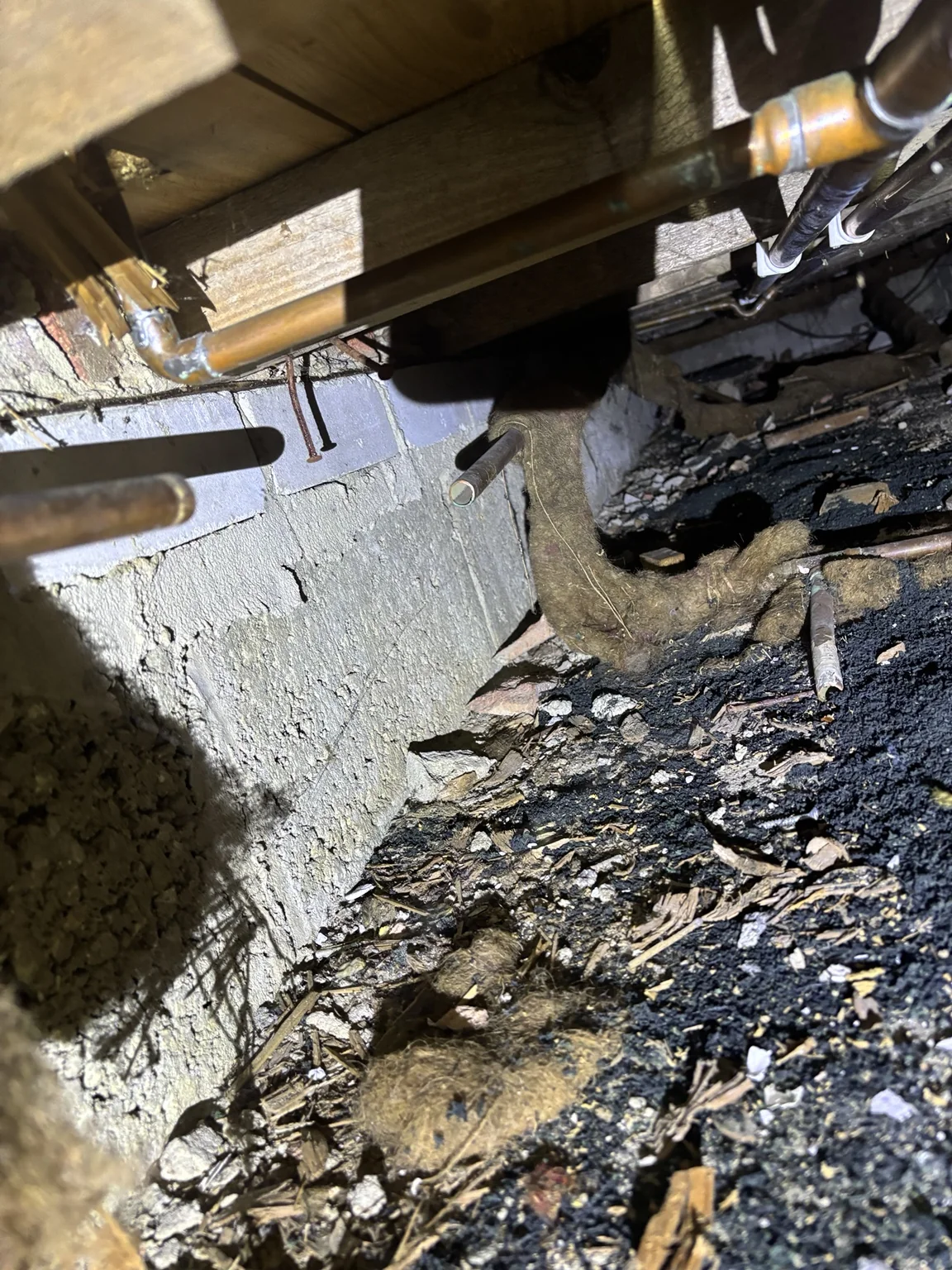
During the inspection of this 1970s property in Waterlooville, a loose floorboard provided a view into the suspended timber floor void below. Several sections of pipework were visible, including water-carrying pipework without thermal insulation and redundant-looking pipework with an older fibrous lagging material.
Why inspect beneath a loose floorboard?
Floor voids are normally concealed from view. Where loose or readily accessible floorboards are present, and it is safe to do so without causing damage, I will inspect the accessible floor void beneath. Fixed floorboards, fitted floor coverings and other finishes are not normally lifted as part of a standard survey.
In this case, an existing loose board provided an opportunity to inspect the void and identify issues that would otherwise have remained hidden.
Why does uninsulated pipework matter?
Suspended timber floors are commonly ventilated by outside air to help manage moisture beneath the building. As a result, the floor void can become considerably colder than the occupied rooms above.
Where water-filled pipework passes through a cold ventilated void without suitable insulation, it can be more vulnerable to freezing during prolonged periods of low temperature. If water freezes within a pipe it expands, which can damage pipework or fittings and may lead to leakage when the pipe thaws.
The actual risk depends on factors including the position of the pipework, the amount of ventilation, external temperatures, whether the property remains heated and whether the pipe is still in use. Thermal insulation reduces the risk and also limits unwanted heat loss from hot-water and heating pipes, but it does not make pipework completely immune from freezing.
What about the older fibrous pipe lagging?
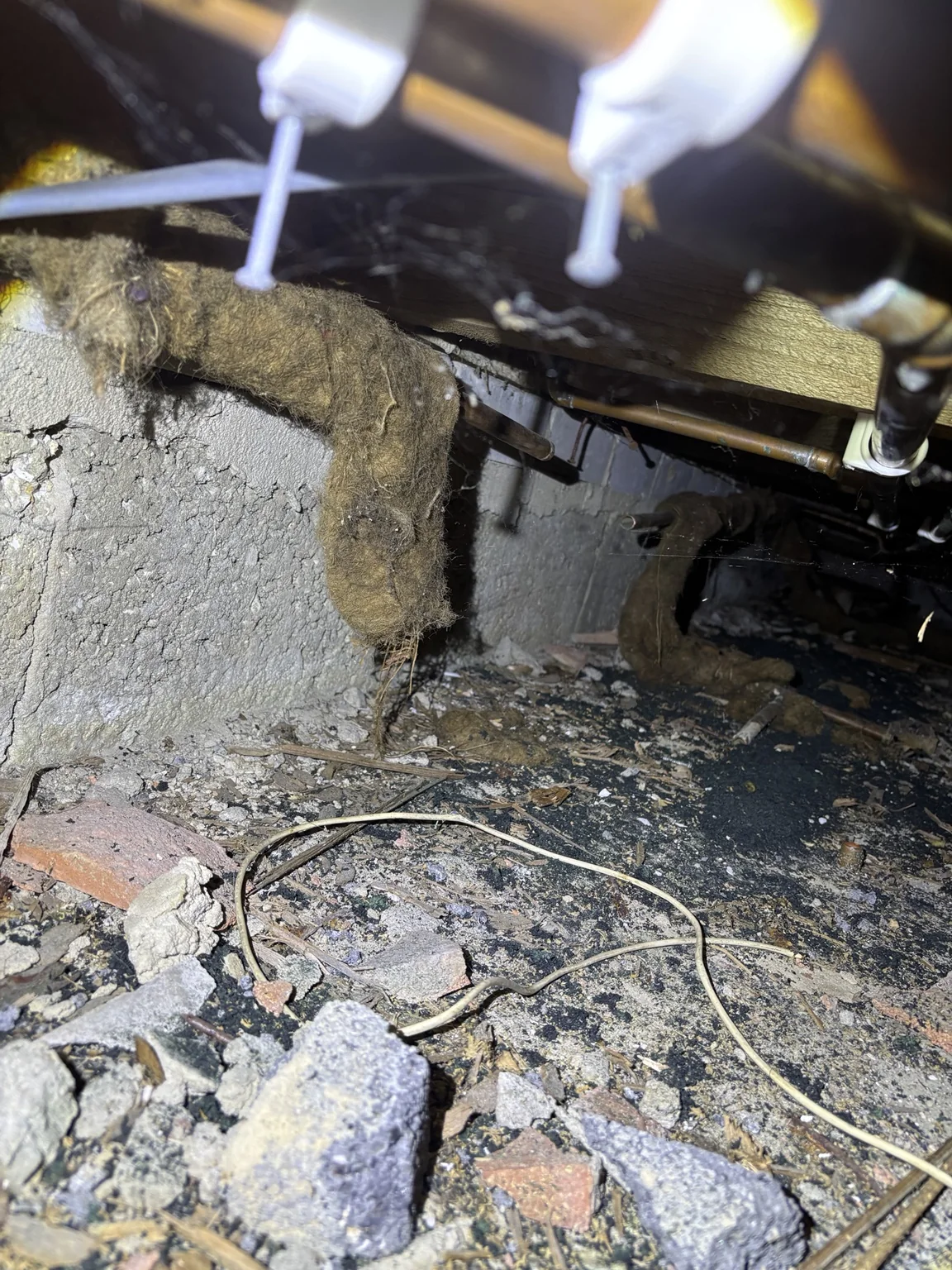
Older fibrous insulation was also visible around sections of redundant or disconnected pipework. Some historic pipe-insulation products contained asbestos, particularly in buildings constructed or altered before 2000.
It is not possible to confirm whether this material contains asbestos from appearance or a photograph alone. It should therefore be treated as a suspect material until its composition has been established by appropriate sampling and laboratory analysis where disturbance or removal is proposed.
Why does the condition of old lagging matter?
If asbestos is present, damaged or friable pipe lagging can release fibres more readily than harder asbestos-containing products. For that reason, it should not be disturbed unnecessarily and contractors working within the floor void should be made aware of the suspected material before plumbing, electrical or floor repairs are undertaken.
What should a homeowner do?
The active water pipework should be identified and its insulation arrangements reviewed by a competent plumbing or heating contractor. Pipework exposed to cold conditions should be suitably protected where necessary.
The older fibrous lagging should remain undisturbed unless investigation or work is required. Where future repairs, plumbing alterations or floor works may affect it, appropriate asbestos investigation should be carried out first by a competent specialist.
What a survey can reveal
Floor voids are normally hidden. Where safe access is available through loose or readily accessible floorboards, inspecting beneath them can reveal defects and potential risks that are not apparent from the room above.
In this instance, the loose board allowed the inspection to identify both poorly insulated pipework and an older fibrous material that warranted further consideration before being disturbed.