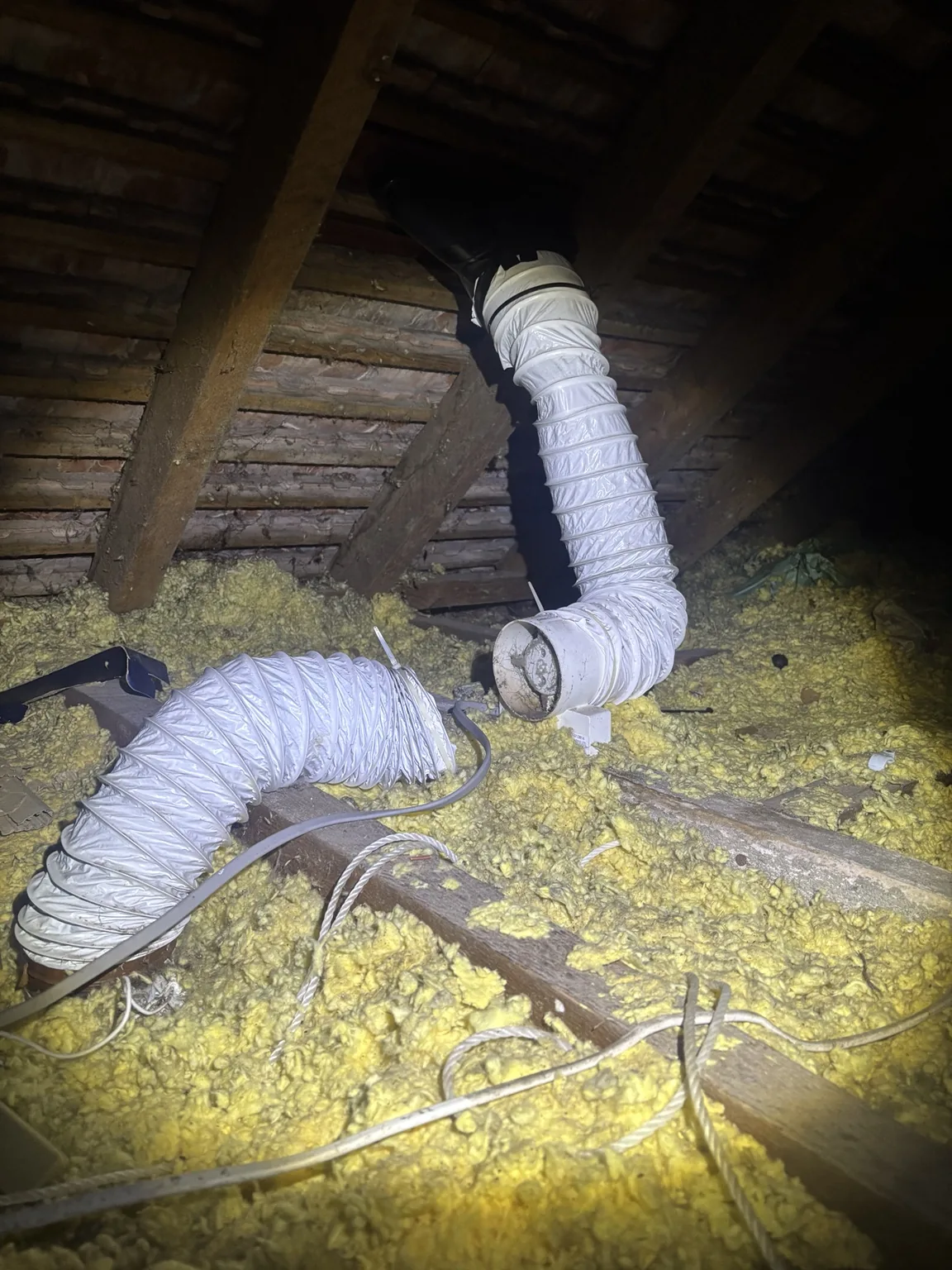
This roof-space inspection identified flexible ducting serving a bathroom extractor fan that had become detached. Instead of carrying humid air to an external terminal, the system was able to discharge moisture-laden air directly into the roof space.
Why does detached extractor ducting matter?
Bathrooms generate significant quantities of water vapour. Extract ventilation is intended to remove humid air from the room and discharge it to the outside. Where the duct becomes disconnected, the fan may still operate and sound normal, but some or all of the extracted air can instead be discharged into the roof space.
What can happen in the roof space?
Introducing warm, moisture-laden air into a colder roof space can significantly increase local humidity. In suitable conditions the water vapour can condense on roof timbers, fixings, the underside of roof coverings or the secondary roof lining. Persistent high humidity and condensation can contribute to staining and mould growth and, if prolonged, may increase the risk of timber deterioration.
Why can this be easy to miss?
The bathroom fan itself may appear to be working correctly from inside the property. The defect may only become apparent when the roof space is inspected and the full duct route can be seen. This illustrates why checking service installations within accessible roof spaces is an important part of a residential survey.
Recommended action
The ducting should be securely reconnected and checked along its full length to confirm that it terminates to the outside air rather than within the roof space. The route should be as direct as reasonably practicable and connections should be secure. Where extract ductwork passes through an unheated roof space, condensation control is also important; depending on the installation, this may require suitable insulation, a fall towards the outside or an appropriate condensate arrangement. Any evidence of condensation, mould or timber deterioration within the roof space should then be assessed.