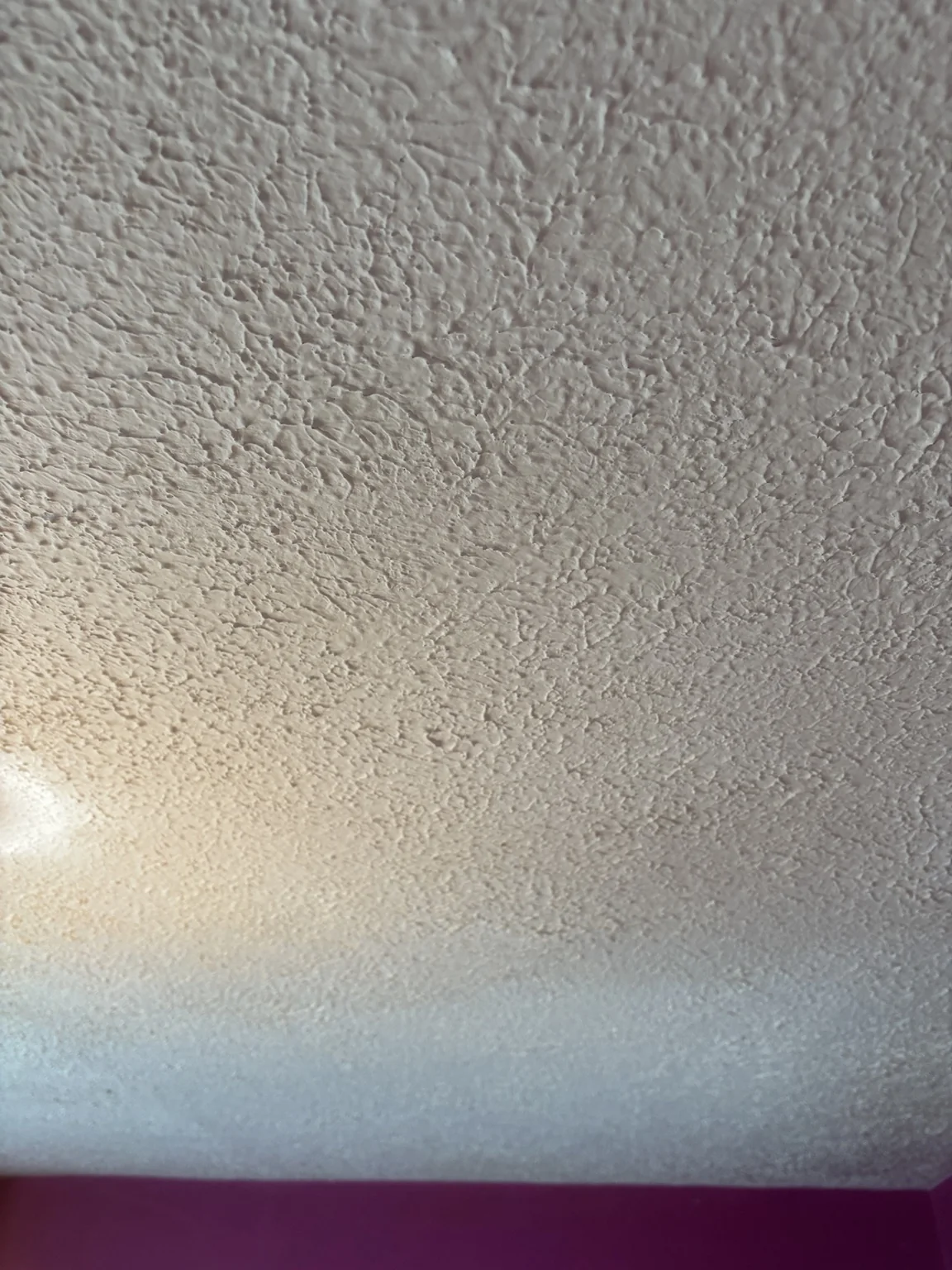
A textured finish had been applied to the plasterboard ceiling. Such finishes are often referred to generically as “Artex”, although that is a brand name and many different products were used.
Why were textured coatings applied?
They were popular because they created a decorative finish and could disguise minor surface irregularities or plasterboard joints. Patterns vary from light stippling to pronounced swirls and peaks.
Could the coating contain asbestos?
Some historic textured-coating products contained a small proportion of asbestos. It is not possible to determine this reliably from colour, pattern or appearance. The age of the coating and any refurbishment history can help assess likelihood, but laboratory sampling is needed for confirmation.
Is an intact coating dangerous?
An intact, sealed coating in good condition generally presents a lower risk than material that is damaged, drilled, sanded or removed. The main concern arises when refurbishment disturbs the finish and releases dust.
What should buyers and owners do?
If the coating is to remain undisturbed, it can often be managed in place and monitored. Before sanding, scraping, drilling or removal, obtain advice from a competent asbestos surveyor and arrange sampling where appropriate. Contractors should be told of the potential risk before work starts.
What if the ceiling needs repair?
Options may include local repair, overboarding or professional removal, depending on condition and the refurbishment plan. The safest and most economical approach should be agreed after the material has been assessed.