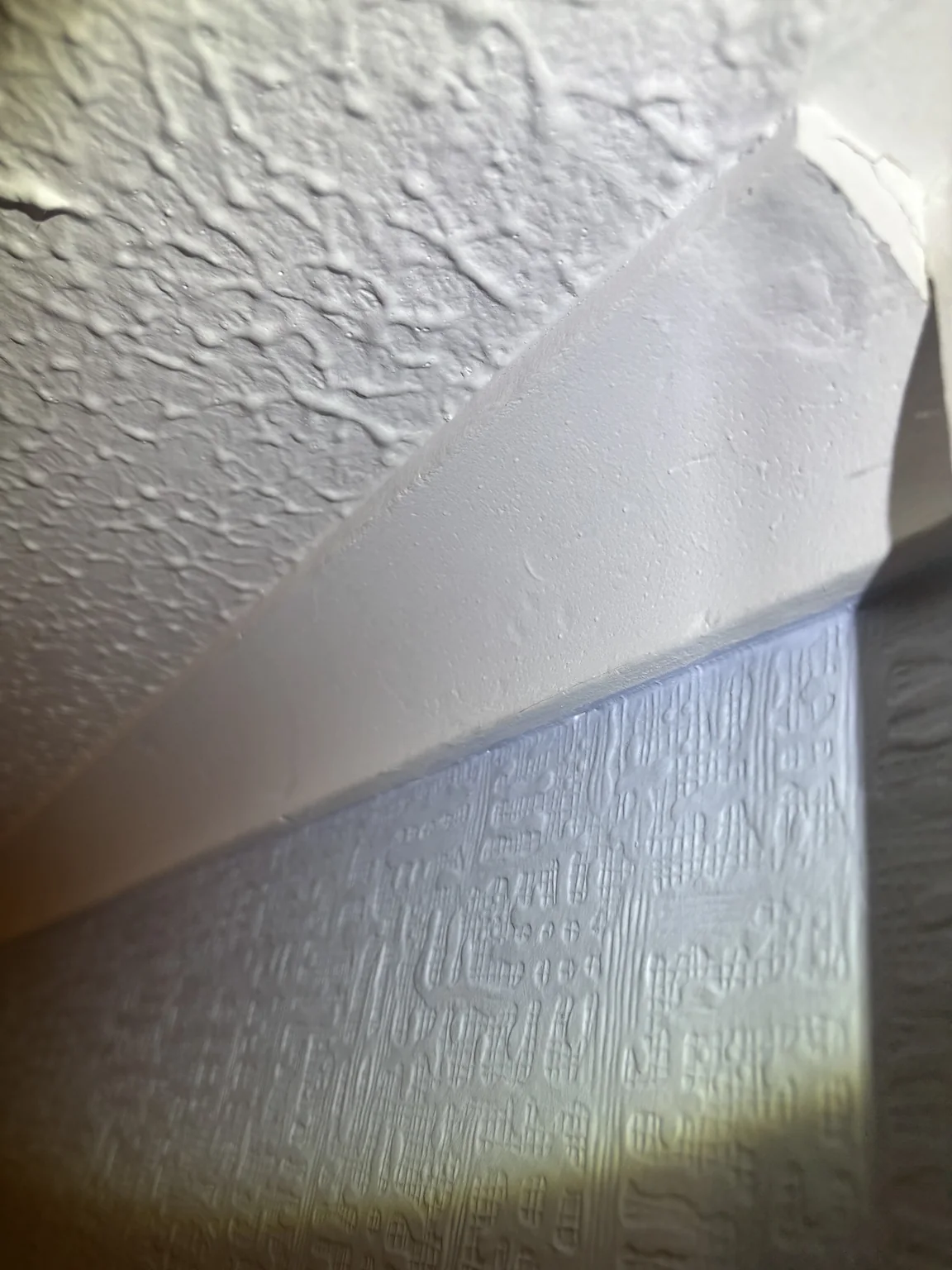
This inspection photograph shows lightweight moulded coving at the wall and ceiling junction. The small cellular texture visible beneath the paint is typical of expanded polystyrene rather than traditional plaster coving.
Why was polystyrene coving used?
It provided a quick and inexpensive way to create a decorative junction between walls and ceilings. It is light, easy to cut and could be fixed directly over uneven finishes, so it became common in many post-war homes and later DIY refurbishments.
Is it a structural defect?
No. Polystyrene coving is normally a decorative finish and its presence does not indicate structural failure. Surveyors may mention it because it can conceal cracking or poor plaster junctions and because removal can damage the finishes beneath.
What are the practical drawbacks?
Paint can obscure the joints and make the material difficult to identify. Sections may loosen where adhesive has failed, and replacement profiles may not match. If removed, the adjoining ceiling and wall may need patching or replastering.
What should owners do?
Sound, secure coving can normally be left in place and redecorated. Loose or damaged sections should be carefully removed and replaced or the junction made good. Care is needed around electrical fittings and when using heat-producing tools during refurbishment because polystyrene is combustible.
Can it hide other finishes?
Yes. Coving may overlap textured coatings, wallpaper or cracks at the wall-to-ceiling junction. Where major refurbishment is planned, allowance should be made for concealed making-good once it is removed.