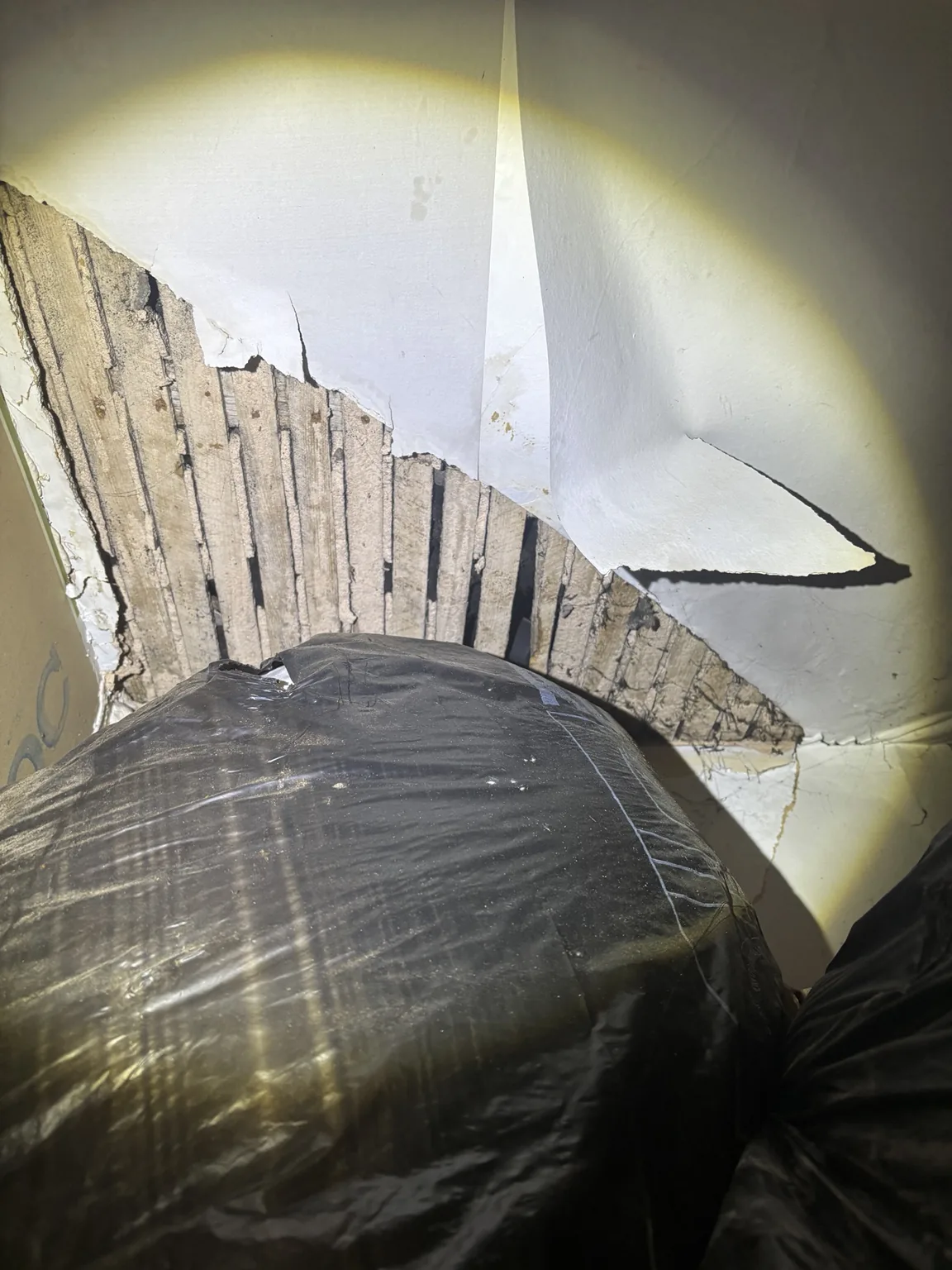
Within an airing cupboard, part of a traditional lath and plaster ceiling had broken away following a previous leak from a water tank. The timber laths were exposed and the remaining plaster around the damaged area had lost support.
How lath and plaster ceilings work
Traditional plaster was applied over narrow timber laths. Wet plaster was pushed through the gaps and formed small projections behind the laths, creating a mechanical key. The ceiling depends on these keys remaining sound.
How water causes damage
Leakage can soften the plaster and weaken the bond between the plaster and the laths. As the keys deteriorate, sections may crack, sag or detach. Even after the plumbing leak has been repaired, the surrounding ceiling can remain weakened.
Why does it matter?
Damage is not necessarily limited to the visibly missing section. Adjacent plaster may also be loose, and concealed timbers should be checked where they have been exposed to prolonged moisture. Loose plaster presents a risk of further collapse and should not be treated as a purely decorative issue.
What should happen next?
The source of leakage should first be confirmed as permanently repaired. A competent contractor should then remove unstable material, assess the surrounding ceiling and complete appropriate repairs. Depending on the extent of deterioration, this may involve a localised traditional repair or replacement of a larger section using plasterboard.
Why a survey matters
Historic water damage is often assumed to be resolved because the surface is dry at the time of viewing. A survey considers the condition left behind and identifies whether finishes or concealed materials may still require repair.