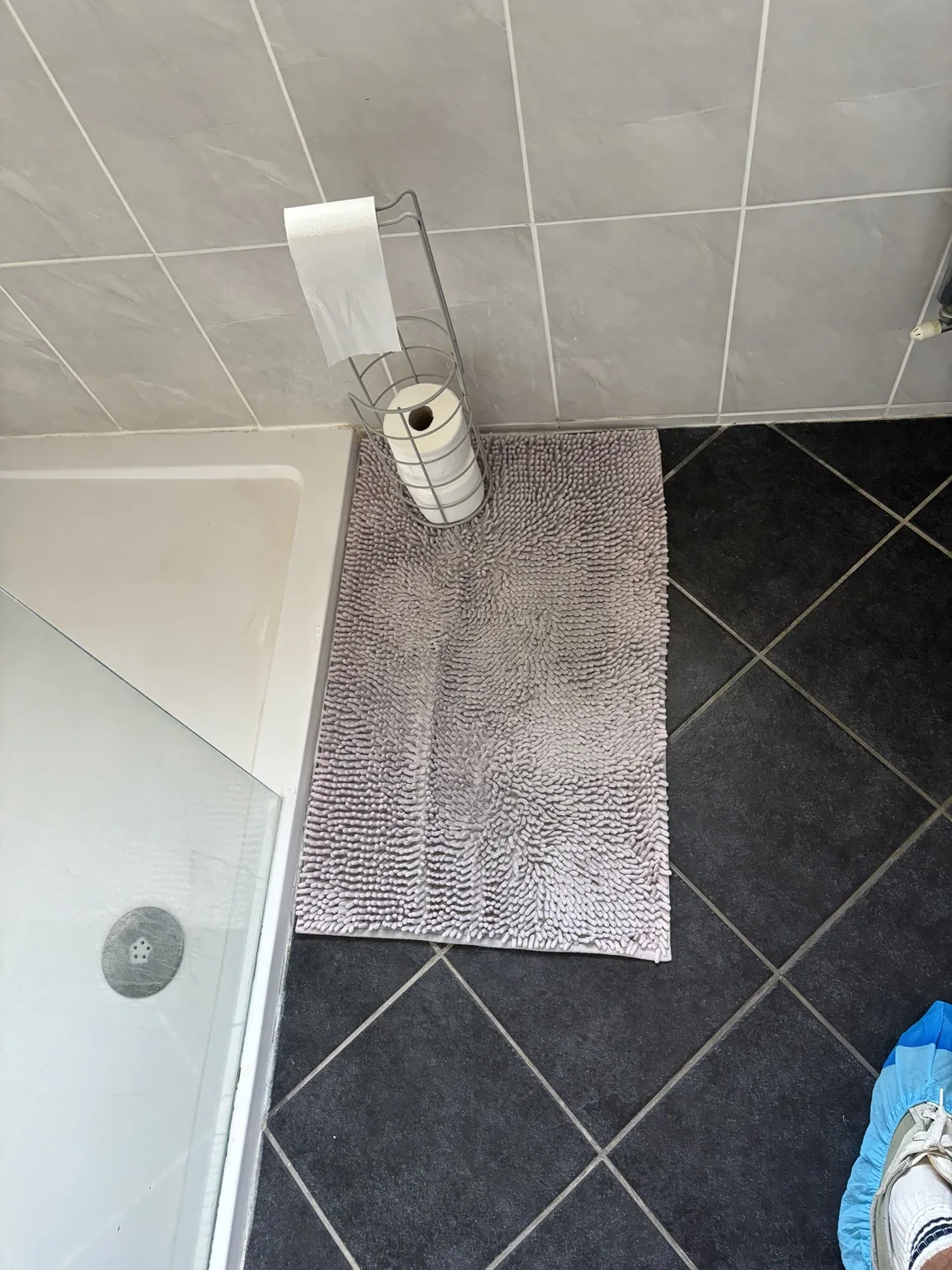
During a recent Level 2 Home Survey of a 1930s bungalow, a bath mat had been positioned immediately beside the shower tray in an en-suite. When the loose mat was lifted as part of the inspection, it revealed significant damage to the tiled floor that had not been visible on first entering the room.
Hidden in plain sight
Everyday items such as mats, rugs, bins, furniture and stored belongings may obscure defects. Sometimes their position is entirely innocent; in other cases, items may have been placed where damage is present. A buyer viewing a furnished property may therefore leave with an incomplete impression of its condition.
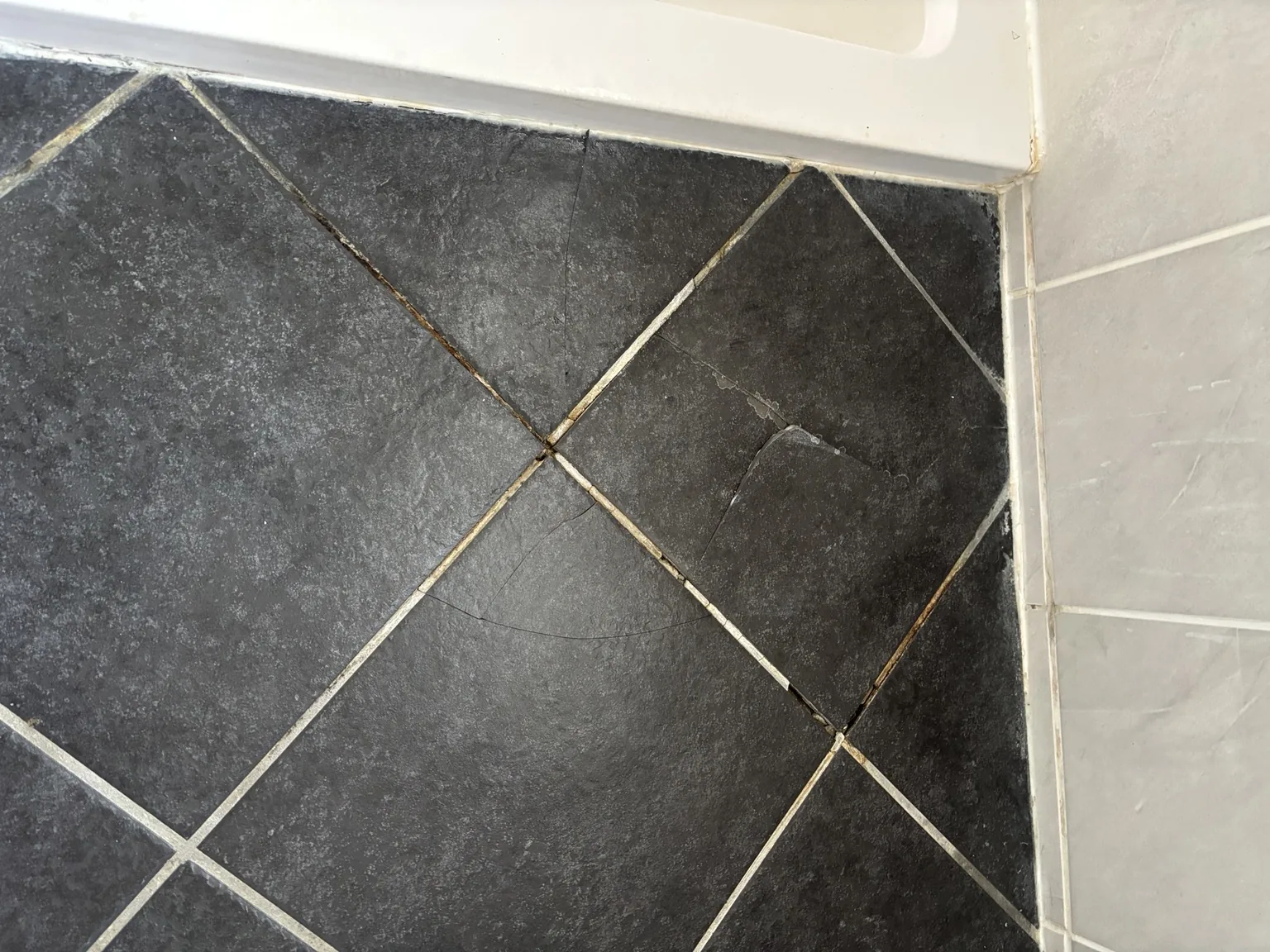
Why was the location of the damage important?
The damage was immediately adjoining the shower tray, where failed joints or defective seals can allow water to pass beneath the tiled finish. In this case, the open and damaged area created a credible route for repeated water penetration into the sub-floor void. As the bungalow has suspended timber flooring, there is a risk that the concealed floorboards or supporting timbers have become damp and may have started to deteriorate.
Why a thorough survey matters
This defect could easily have been missed during a brief viewing because the damaged area was covered. A professional survey involves a more methodical inspection of the property, and I take the extra step of checking beneath loose mats and other readily moveable coverings where it is safe and reasonable to do so. That closer inspection can reveal defects that are not immediately apparent and may materially affect a buyer’s decision or future repair costs.
What should happen next?
The shower tray seals, damaged tiling and the floor beneath should be opened up and inspected by a competent bathroom or flooring contractor. Moisture-damaged materials should be removed, and the suspended timber floor should be checked for dampness, decay and loss of strength before the area is repaired and made watertight.