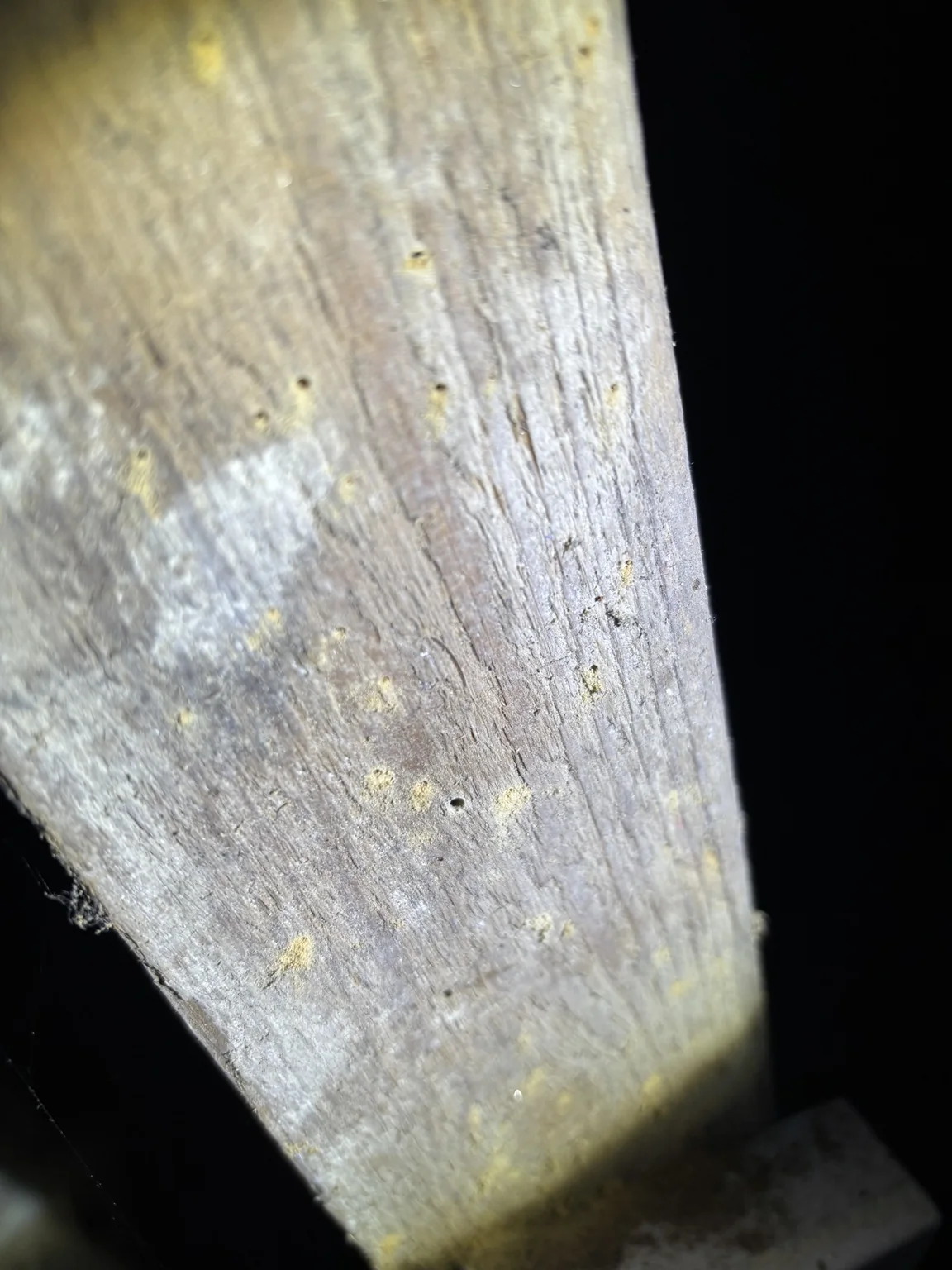
During the roof-space inspection of this 1930s property in Portsmouth, small flight holes with associated frass were identified to a timber strut. The combination raised concern that the wood-boring insect activity may be recent or ongoing.
What are flight holes and frass?
Wood-boring beetle larvae can live within timber before emerging as adult beetles. When they leave the timber they create small flight holes. Frass is the fine powdery or granular material produced as insects tunnel through or emerge from the wood.
Flight holes can remain visible for many years after an infestation has ceased, so holes alone do not prove that insects are still active. Fresh-looking frass around or beneath the holes, however, can be an indication of more recent activity and is a reason to investigate further.
Why does it matter?
If wood-boring insect attack remains active over a prolonged period, repeated tunnelling can gradually reduce the strength of affected timber. The significance depends on the extent of attack, the species involved, the size and structural function of the timber and how much sound material remains.
A small number of isolated holes does not automatically mean that a roof structure is seriously weakened. The affected member and the surrounding accessible timbers need to be considered together before the extent of the problem can be understood.
Why moisture should also be considered
Moisture conditions are relevant because some wood-boring insects are more likely to thrive where timber moisture levels are elevated. Damp timber may also be more vulnerable to other forms of deterioration.
Where evidence of insect activity is found in a roof space, it is therefore sensible to consider whether roof leaks, condensation, restricted ventilation or another moisture source could be contributing to conditions within the timber. Treatment alone may not address the underlying cause if excess moisture is present.
Does every flight hole need chemical treatment?
No. Historic flight holes without evidence of continuing activity may not require treatment. Where fresh frass or other evidence raises concern about recent or active infestation, the extent of affected timber should first be established and the likely source of moisture considered.
A suitably experienced timber specialist may be required to confirm whether an infestation remains active, identify the likely insect involved and advise whether treatment is appropriate. If there has been significant loss of timber section, local strengthening or replacement may also be required.
What should a homeowner do?
Accessible surrounding roof timbers should be checked for additional flight holes, frass, softness, decay or other deterioration. Any associated moisture source should be investigated and repaired where necessary. Further specialist assessment is appropriate where activity appears recent, the extent is unclear or structural timber has been materially affected.
What a survey can reveal
Flight holes may only be a few millimetres across and can easily be missed during an ordinary viewing. A detailed roof-space inspection can identify the holes, associated frass and any wider signs of timber deterioration, allowing a buyer to investigate the issue before committing to the purchase.