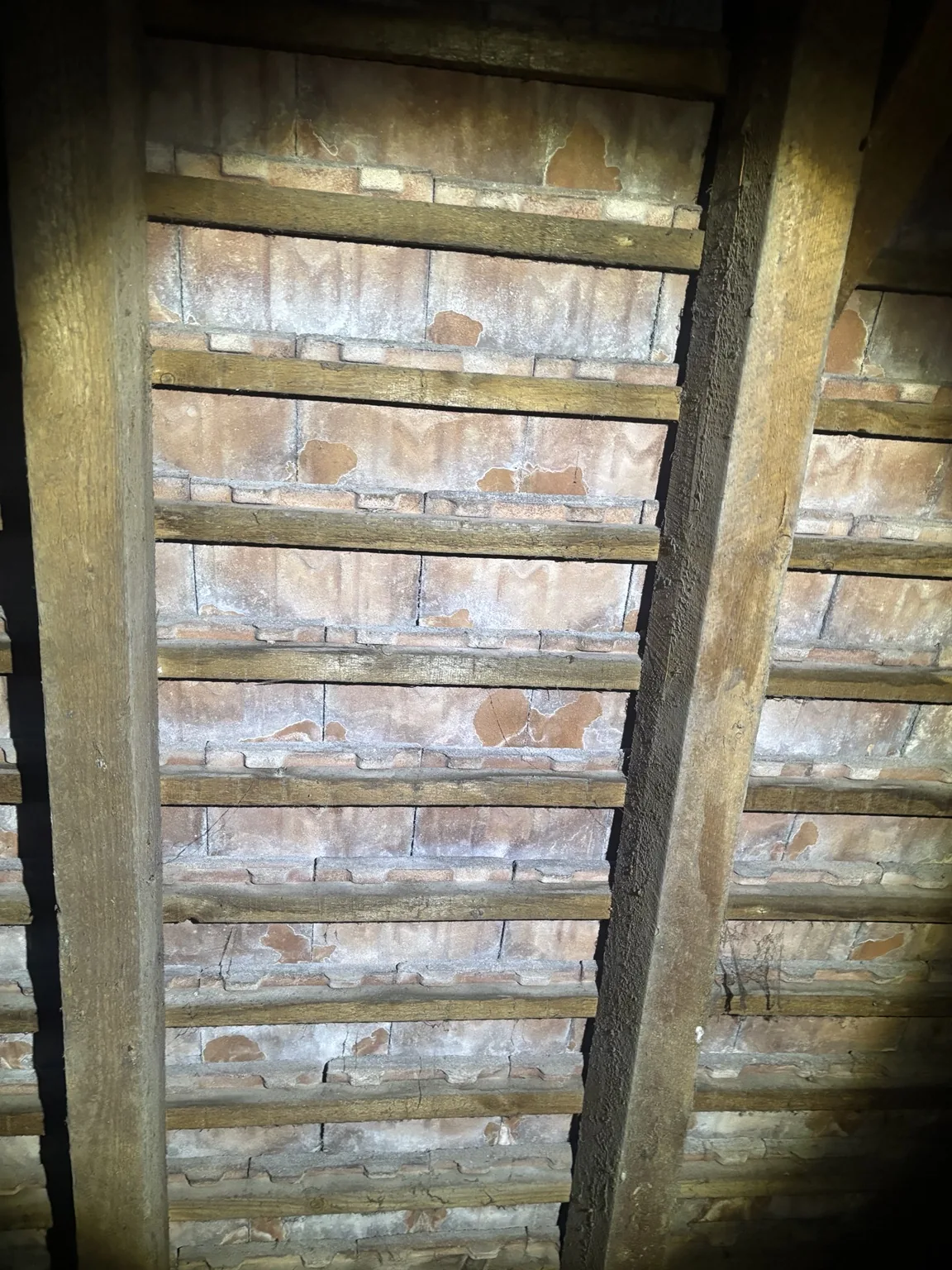
During the roof-space inspection of this 1950s property, the underside of the clay roof tiles and battens was visible because the roof had no secondary lining of felt or modern breathable membrane.
Is a roof without felt automatically defective?
No. It is not unusual to find roofs from this period, particularly where the roof construction or covering is substantially original, without a secondary underlay. The absence of felt alone does not mean that the roof has failed: the tiles or slates are the primary weathering layer. A buyer who is used to modern roof construction may nevertheless be concerned when the underside of the coverings is exposed.
What does the secondary lining normally do?
Roofing underlays provide a secondary line of defence beneath tiles or slates. They can help shed wind-driven rain or snow that passes the outer covering and provide a drainage path towards the eaves. They are not a substitute for a sound roof covering. Older roofs without an underlay therefore rely more directly on the condition, headlap and weather-tightness of the tiles or slates and associated roof details.
What should a surveyor look for?
The important question is not simply whether felt is present, but whether there is evidence of water penetration, displaced or damaged coverings, defective flashings, decay to the battens or roof timbers, or other signs that the roof is not performing satisfactorily. The roof-space ventilation arrangement and any evidence of condensation should also be considered, because moisture performance depends on the roof build-up as a whole.
Does felt need to be added?
Installing a continuous modern underlay normally requires the roof covering and battens to be lifted, so it would not usually be proportionate to strip an otherwise serviceable roof solely because the original construction has no felt. A suitable underlay would commonly be introduced when the roof is eventually renewed or substantially re-covered, with the ventilation and condensation-control strategy considered at the same time.
What should a buyer take from this?
This is a good example of a construction detail that can look concerning without necessarily being a defect. The survey should explain the age-related construction, identify any associated evidence of deterioration or leakage and help the buyer understand what, if anything, requires action.