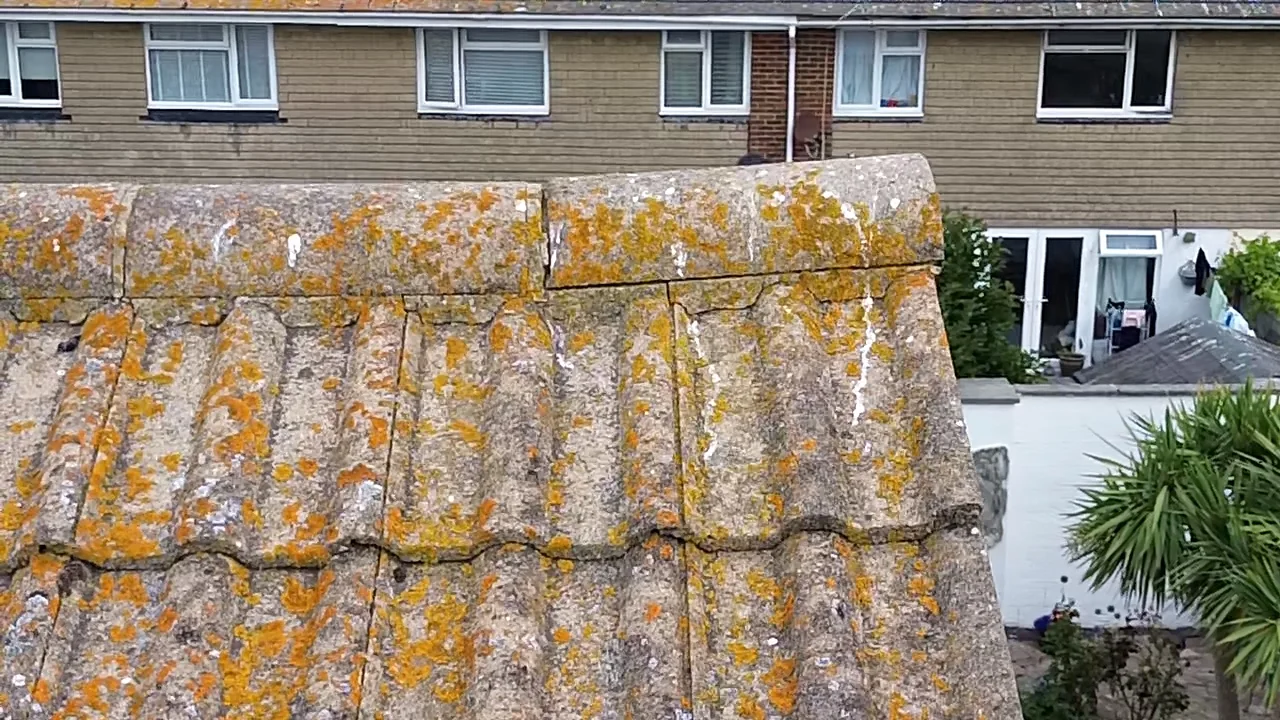
The ridge tile in this inspection photograph was uneven and the bedding mortar had deteriorated, leaving open joints and reduced restraint. At an exposed coastal property, this is more than a cosmetic maintenance issue.
What do ridge tiles do?
Ridge tiles weather the junction at the highest point of a pitched roof. Traditionally, they were bedded and pointed in mortar. The mortar helps hold the tiles in position and limits rain penetration at the ridge.
Why does the mortar fail?
Mortar is exposed to wind, rain, frost, thermal movement and vibration. Cracks develop as it ages, allowing further moisture entry. Coastal properties may experience stronger winds, salt-laden air and frequent driving rain, which can accelerate weathering and increase the consequences of looseness.
Why are loose ridge tiles a concern?
A displaced tile can permit wind-driven rain to reach the roof structure. More importantly, a tile that becomes detached can fall from height, presenting a safety risk to occupants, neighbours and passers-by. Loose sections can also contribute to progressive failure of adjoining bedding.
What repairs are available?
Local repair may involve carefully lifting affected tiles, removing loose mortar and rebedding them on suitable new mortar with mechanical fixings where required. Where deterioration is widespread, it may be more economical to renew the full ridge. A proprietary dry-ridge system provides mechanical restraint and avoids reliance on mortar alone, but it must be installed in accordance with the manufacturer’s specification.
When should it be repaired?
Loose or visibly displaced ridge tiles should be treated as a priority, particularly at exposed sites. A roofer should inspect the full ridge from safe access because defects visible in one location may extend further along the roof.