A drone inspection can reveal roof defects that are difficult or impossible to assess properly from ground level. The following photographs were taken during real residential inspections and show four different issues.
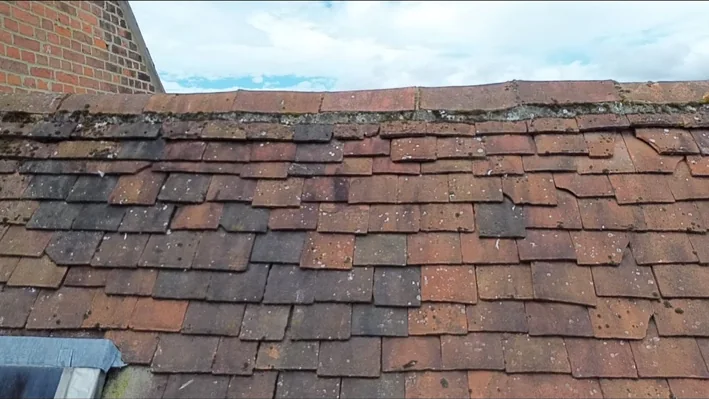
1. Deteriorated roof coverings
Individual slipped or cracked tiles can sometimes be repaired locally. Where deterioration is widespread, however, repeated patching may no longer provide a dependable or economical solution. The condition of the underlay, battens and roof structure also needs to be considered before the repair strategy is decided.
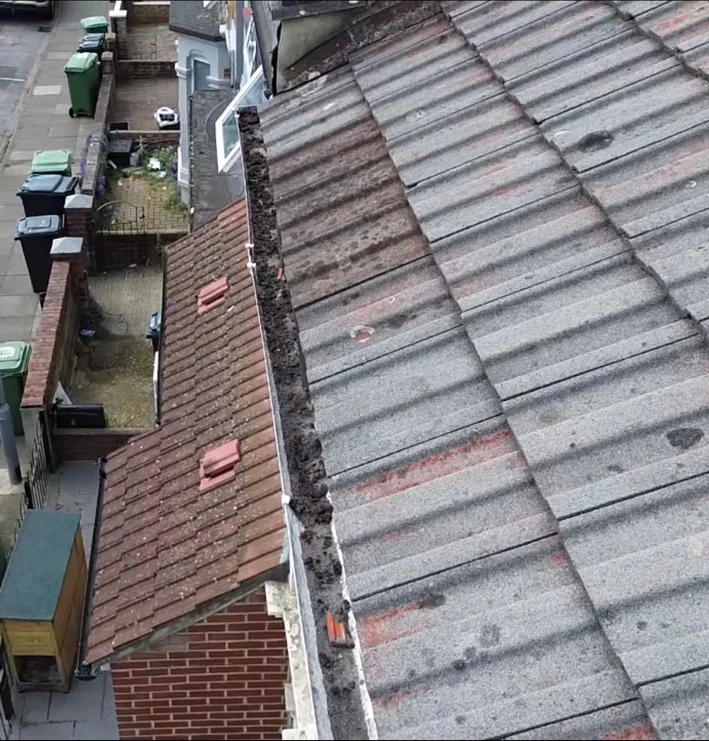
2. Blocked valley gutter
Valleys receive concentrated rainwater and should remain clear. Accumulated moss and debris can slow or obstruct drainage, encouraging water to back up beneath the adjoining tiles. This may lead to dampness within the roof space, decay to concealed timbers and damage to internal finishes.
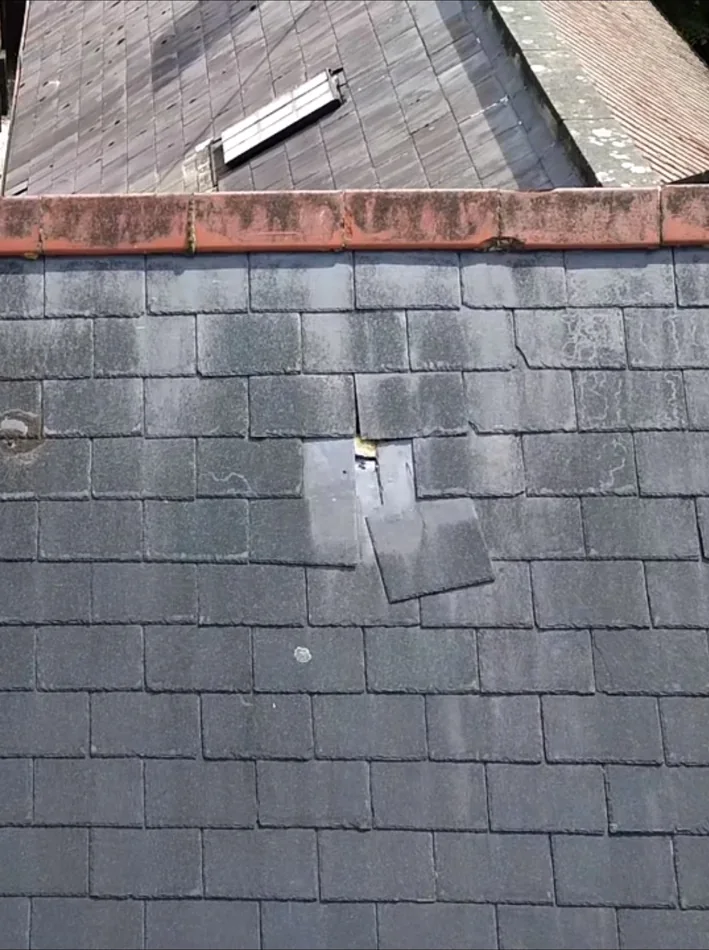
3. Slipped slates and temporary repairs
Slates can slip where their fixings corrode or fail. A visible patch may reduce leakage temporarily but does not necessarily address defective surrounding fixings or deterioration elsewhere across the slope. A competent roofing contractor should assess whether isolated repair remains suitable.
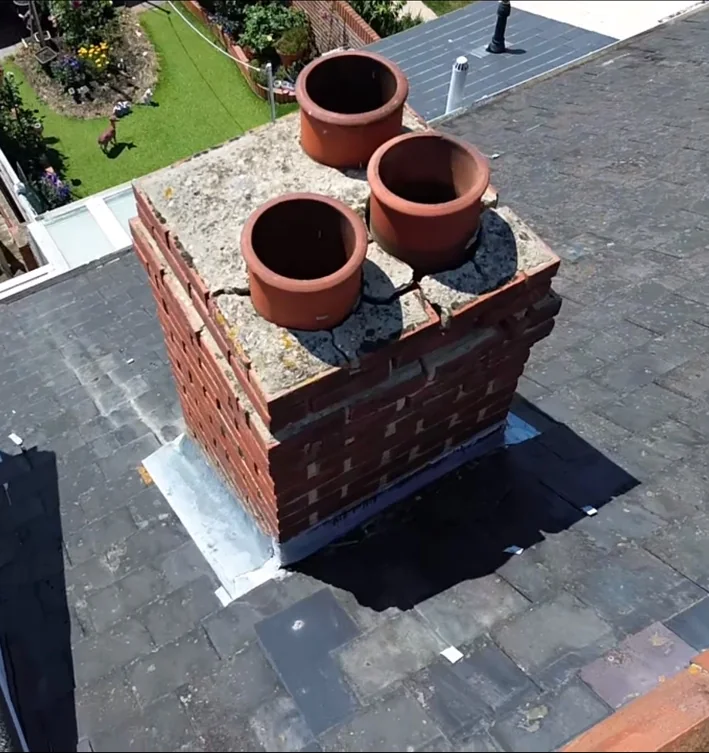
4. Cracked chimney flaunching
Flaunching is the sloping mortar at the top of a chimney stack. It sheds rainwater and helps secure the pots. Cracking allows moisture to penetrate the chimney head, where repeated wetting and frost action can accelerate masonry deterioration. Loose pots and fragments of mortar can also become a safety hazard.
What would normally be recommended?
The appropriate action depends on the extent of deterioration. Typical recommendations include clearing and testing rainwater channels, replacing slipped or broken coverings, renewing defective fixings, rebuilding localised roof details and renewing failed chimney flaunching. Repairs should be carried out by a suitably experienced roofing contractor, with safe access provided.