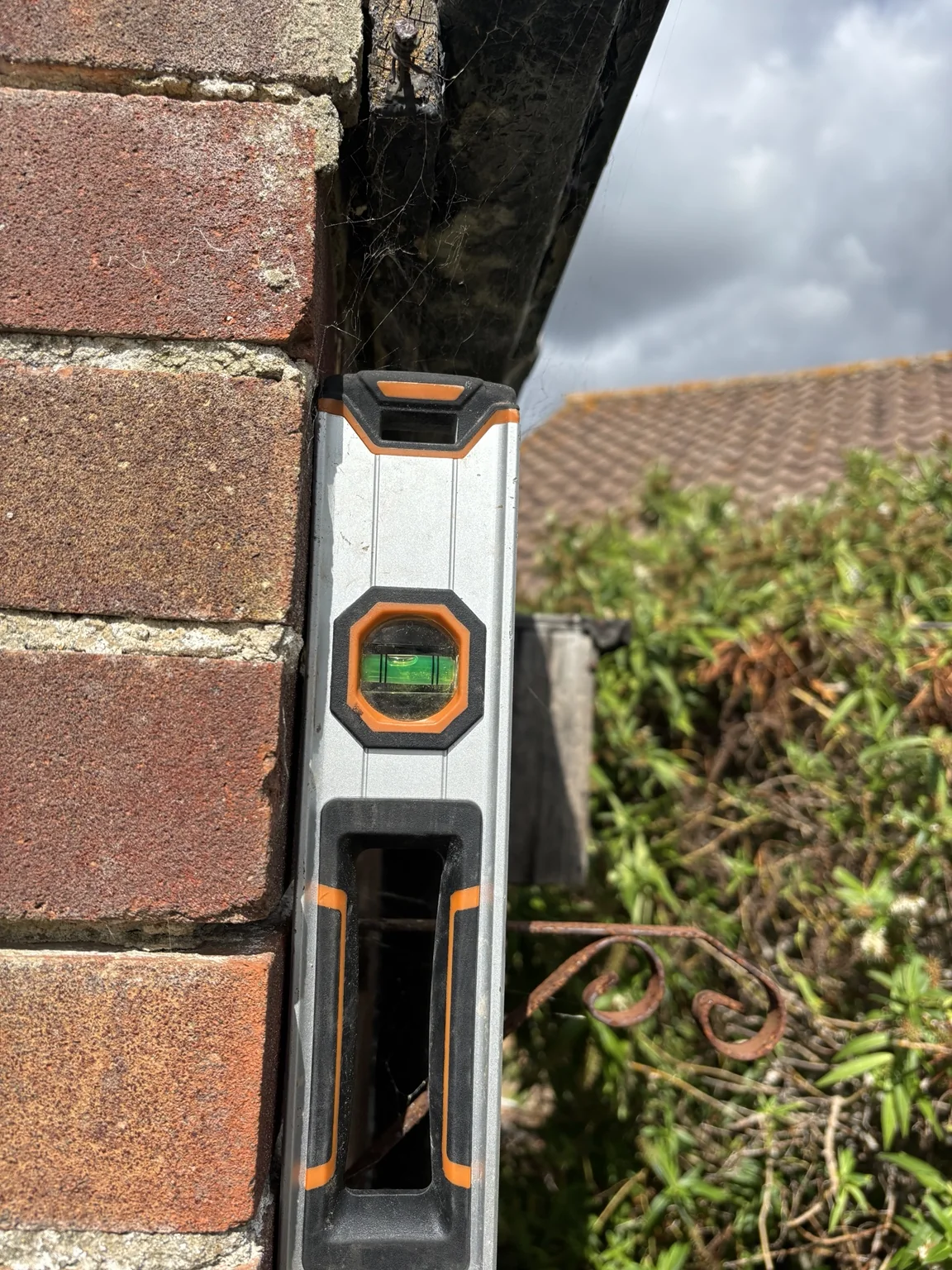
At this 1950s property in Hayling Island, outward movement was identified to the left and right side walls of a single garage. The garage was constructed in single-skin brickwork with masonry piers. The pitched roof was covered with interlocking concrete tiles, and the roof rafters bore onto the affected side walls.
What was observed?
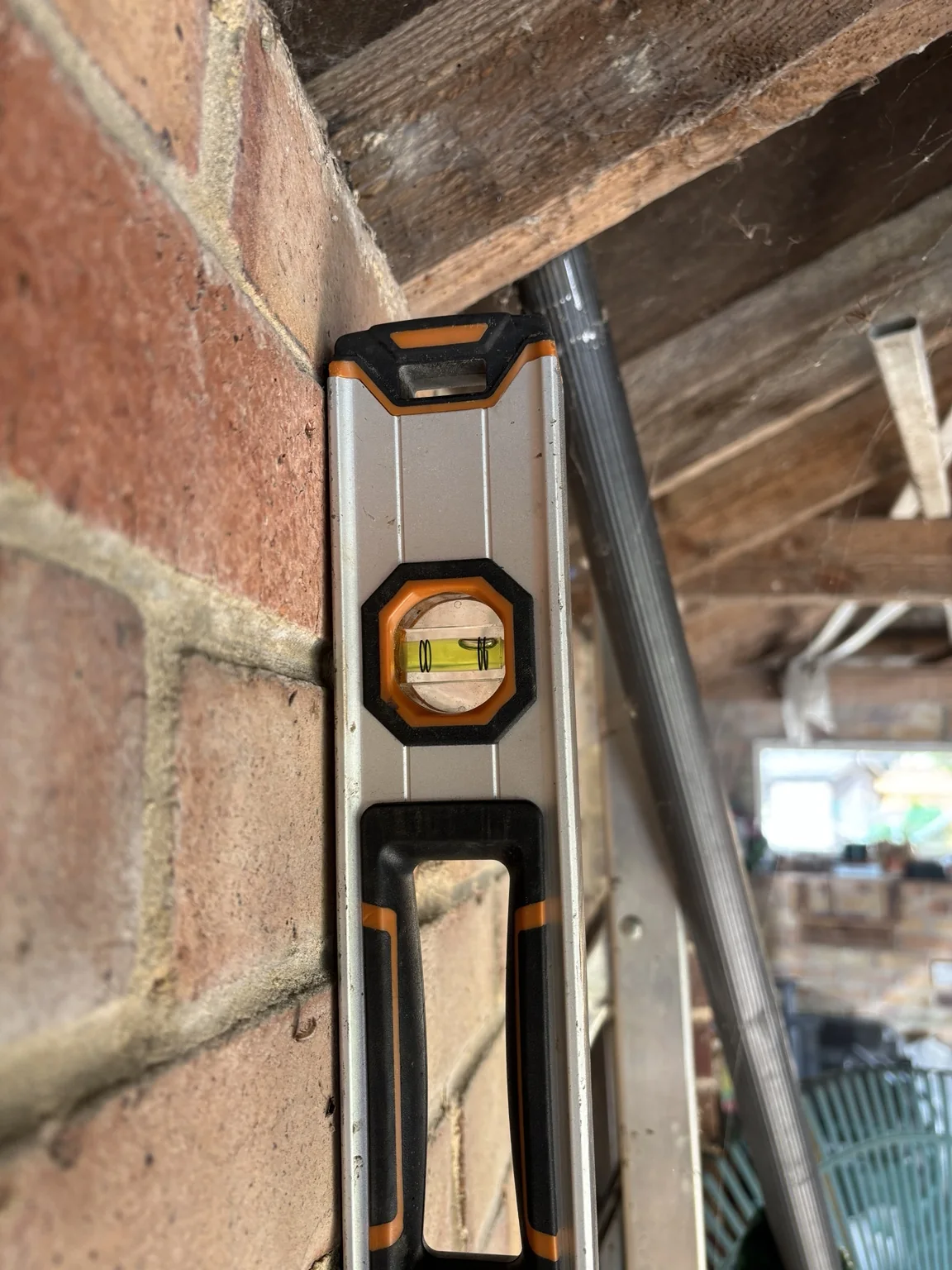
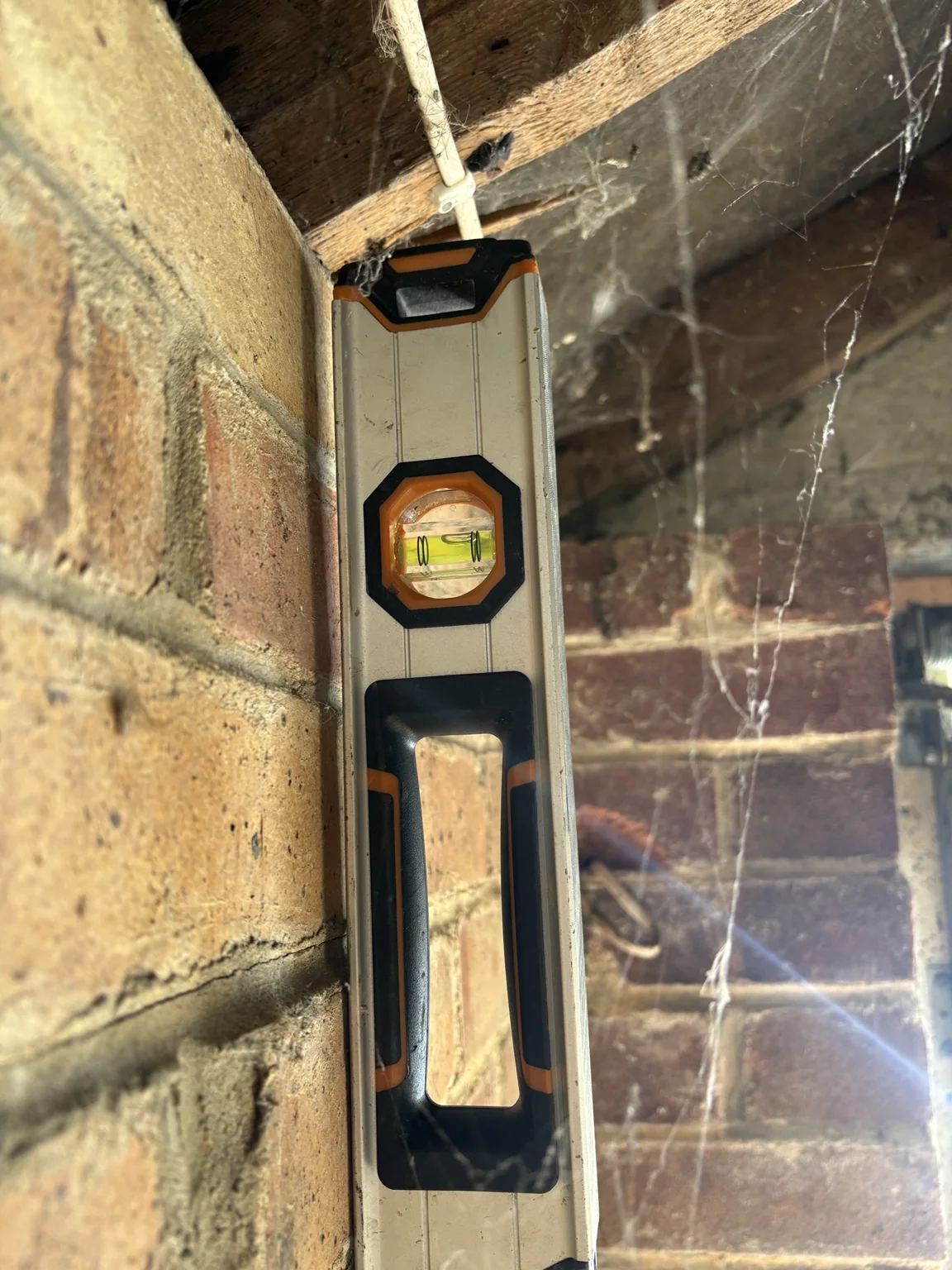
The side walls were visibly bowing outwards and were not plumb when checked against a spirit level. The photographs illustrate the distortion, but they do not by themselves establish when the movement occurred, whether it remains active or what has caused it.
Why can garage walls bow outwards?
Single-skin brick garage walls are relatively slender and generally provide less lateral stiffness than the walls of a typical house. Outward movement can develop for several reasons, including inadequate lateral restraint, long-term distortion of the masonry, movement at foundations or piers, deterioration or alteration of structural connections, or roof spread where the roof structure is not adequately tied.
The presence of a tiled pitched roof makes it important to consider how the roof loads are transferred to the walls and whether the rafters and any ties provide effective restraint. The roof covering itself should not be assumed to be the cause of the movement without further investigation.
Why does this matter?
Outward bowing is more than a cosmetic defect because the affected walls support the roof. If movement progresses, cracking and distortion can increase and the stability of the masonry or roof support may eventually be affected. The significance depends on the amount and pattern of movement, the condition of the piers, the roof arrangement and whether the distortion is historic or continuing.
What should happen next?
Where appreciable outward movement is present, the roof structure, wall plates or bearing points, masonry piers, wall restraint and foundations should be considered together. Further assessment by a suitably experienced structural engineer may be appropriate before remedial work is specified.
Depending on the findings, repairs might involve improving restraint, strengthening local areas or rebuilding affected masonry. The correct solution depends on establishing the cause first, rather than simply repointing or treating the visible distortion.
What a survey can reveal
Garages are often treated as secondary structures during a viewing, yet they can still develop defects with significant repair implications. Checking whether walls remain plumb and considering how they interact with the roof can reveal movement that might otherwise be overlooked.