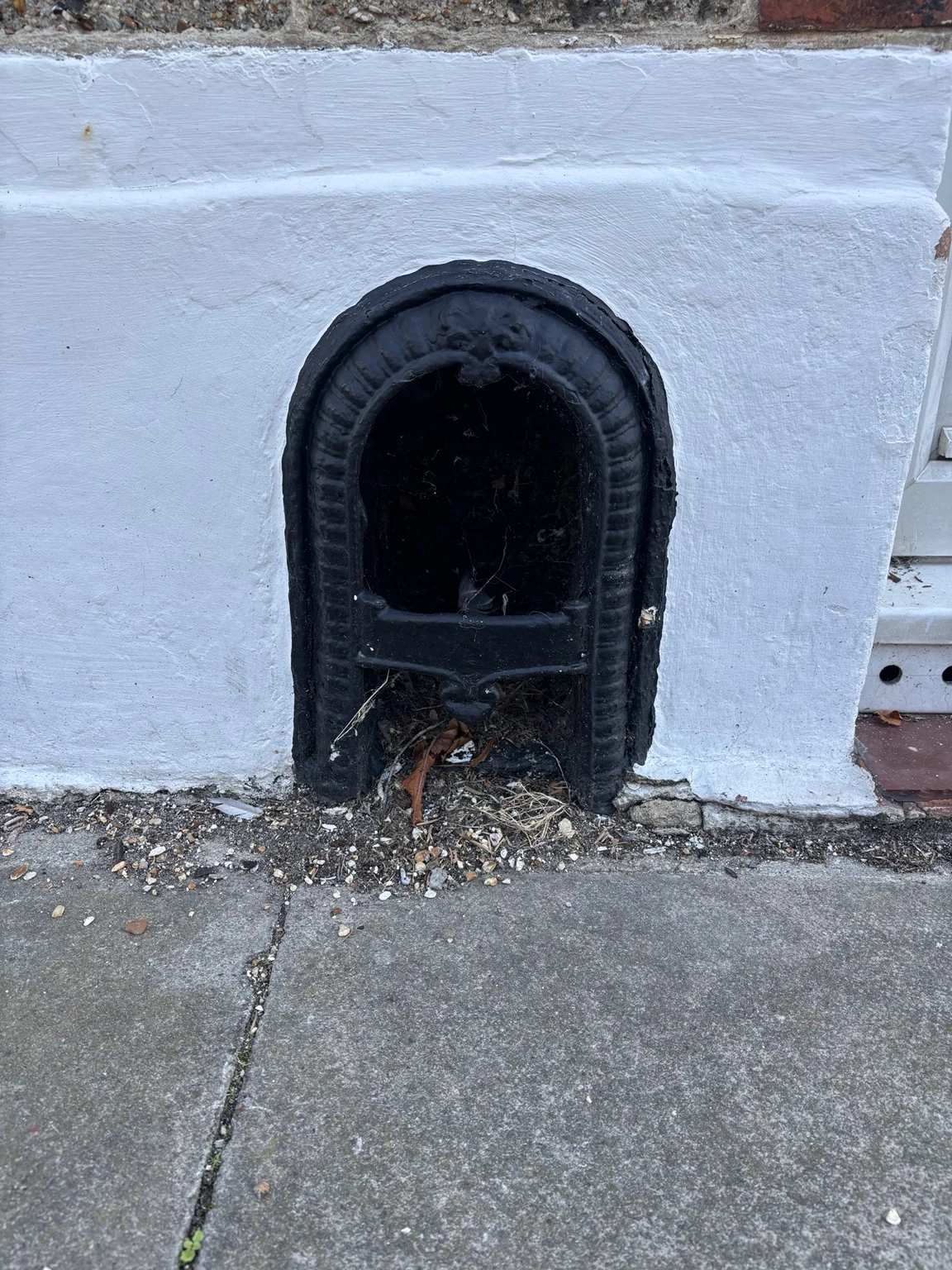
During inspection of this 1880s terraced house in Southsea, Portsmouth, a cast-iron boot scraper was found recessed into the masonry at low level beside the entrance.
Features like this were once practical parts of everyday life. Before modern road surfacing and widespread paved footways, boots were much more likely to arrive at the front door covered in mud and street debris. A fixed scraper allowed occupants and visitors to clean their footwear before entering the house.
Why were boot scrapers built into houses?
Boot scrapers became a common detail on many Georgian and Victorian houses, particularly where entrances opened directly onto the street or a small front area. They might be freestanding, fixed beside a step or, as here, recessed directly into the wall or plinth.
Their position at the threshold made them convenient to use and kept dirt outside, which was particularly useful at a time when internal floor finishes were harder to clean and streets could be considerably muddier than they are today.
Is it an original feature?
The design and location are consistent with a historic boot scraper, but appearance alone cannot prove the exact date it was installed. It may be original to the house or an early addition made during the building's historic use.
That distinction is worth keeping in mind with older buildings. Surviving details often provide useful clues about the age and development of a property, but they should not be used in isolation to date the whole building.
Why features like this are worth noticing
Older houses frequently retain small details that are easy to overlook during a viewing. Boot scrapers, coal-hole covers, cellar grilles, cast-iron air bricks, original ironmongery and traditional joinery can all contribute to the character of a property and help illustrate how it has changed over time.
From a surveying perspective, these features are not necessarily defects. Their condition and their junction with the surrounding masonry should still be considered, particularly if corrosion, cracking or water penetration is present, but in many cases they are simply part of the building's historic fabric.
Should a historic boot scraper be retained?
Where a feature is sound and does not create a safety or maintenance problem, there can be value in retaining it as part of the property's character. If repair is required, a sympathetic approach that avoids unnecessary removal or damage to the surrounding masonry is generally preferable.
For listed buildings or properties within a conservation area, additional controls may sometimes apply to alterations, so specialist or local-authority advice may be appropriate before significant changes are made.
What a survey can reveal
A detailed survey is not only about identifying defects. Understanding how a property was constructed, altered and used over time can help put defects and repairs into context.
Small surviving features such as this boot scraper may not affect the purchase decision, but they are part of the story of an older house and can help explain its original character and development.