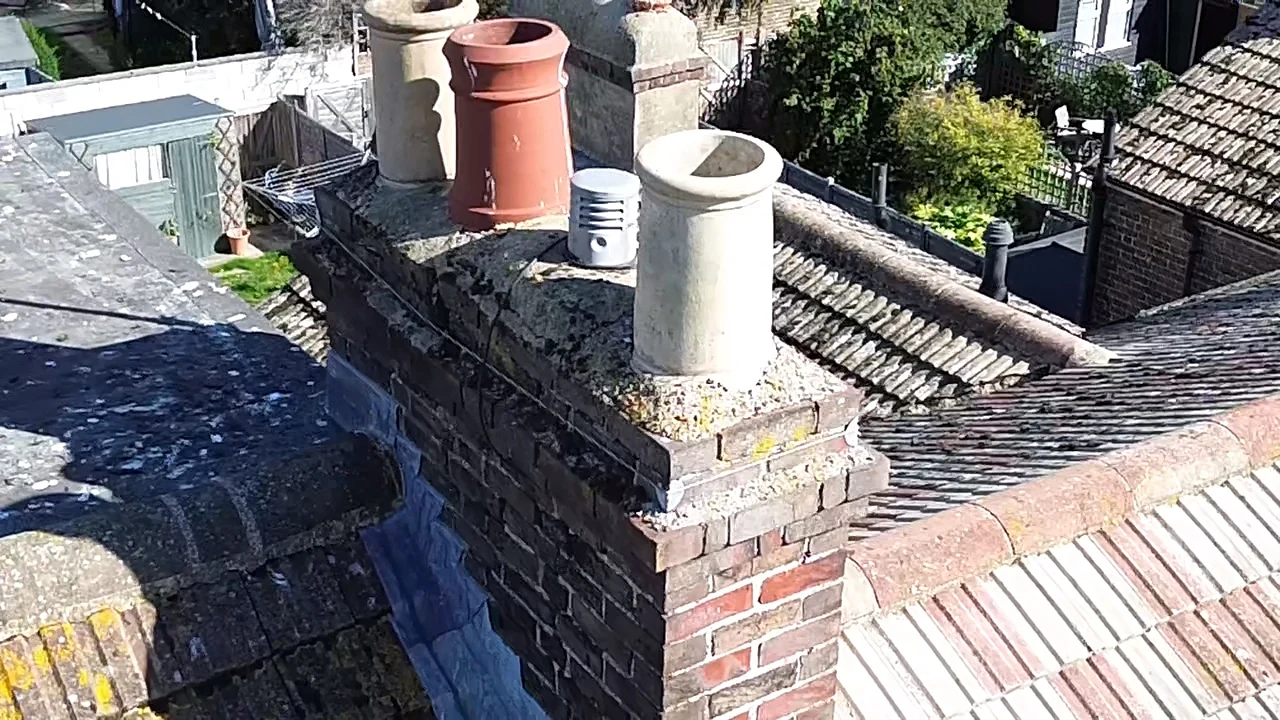
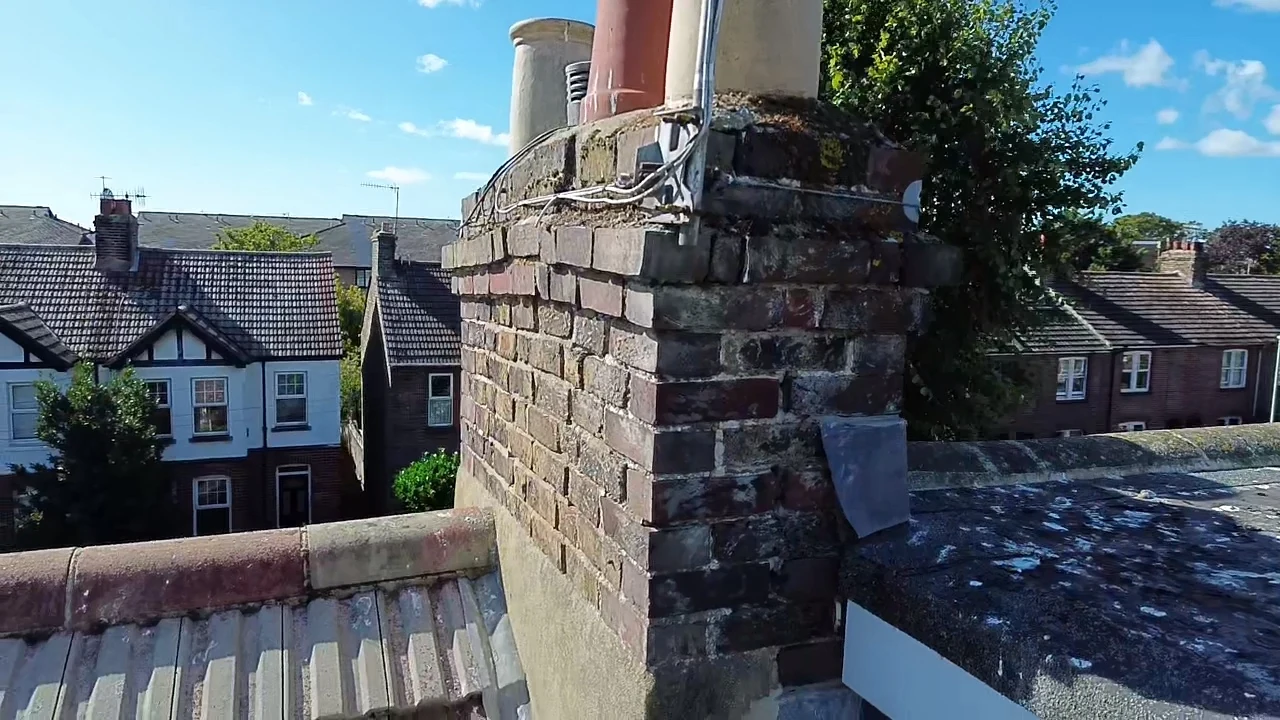
During inspection of this property in Worthing, several chimney pots were noted to be open to the weather and the shared chimney stack showed visible weathering together with apparent distortion or movement to the masonry. Findings of this kind warrant closer consideration because chimney defects can affect both weather tightness and safety, and repairs to a shared stack are often more complicated than repairs to an isolated chimney.
Are open chimney pots a problem?
Not automatically. Whether an open pot is appropriate depends on whether the flue is still in use and how it has been ventilated or terminated. A pot serving an active fireplace or appliance may properly remain open, subject to suitable flue arrangement and weather protection where required.
Where a flue is redundant, however, leaving it fully open can allow rainwater to enter the flue and contribute to dampness within the stack or chimney breast. Equally, disused flues should not normally be sealed completely without thought, because some ventilation is usually desirable to help reduce condensation and keep the flue dry. In many cases a suitable ventilated cowl or cap is the more appropriate arrangement.
Why apparent movement to a shared stack matters
Chimney stacks are exposed parts of a building. Over time, repeated wetting, frost action, sulphate attack, ageing mortar, inadequate previous repairs and general weathering can all contribute to deterioration. If masonry begins to distort, lean or open up at the joints, the concern is no longer limited to water penetration alone. There may also be a question over stability, particularly at high level where detached masonry or loose pots could create a safety risk.
That said, visible distortion in a chimney does not, by itself, confirm active ongoing movement. The condition needs to be judged in context. Some movement may be longstanding and stable, while in other cases more extensive repair or partial rebuilding may be required.
Why shared chimney repairs are often more involved
Where a chimney stack is shared between adjoining properties, repair decisions are not always for one owner alone. The ownership of the stack, the use of each flue and the likely extent of the proposed work all need to be understood before repairs begin. Even relatively straightforward maintenance can become more involved when the work affects a shared structure, shared flashing arrangements or pots serving more than one property.
For that reason, negotiation with the adjoining owner may be needed before work proceeds. Depending on the scope of repair, the Party Wall etc. Act 1996 may also need to be considered. That does not mean every shared chimney defect automatically becomes a party wall matter, but it is a possibility that should be reviewed at an early stage where structural repair, rebuilding or other works to the shared stack are contemplated.
What should happen next?
The first step is to establish the likely condition of the stack and the use of the flues. A suitable contractor should assess the upper masonry, mortar joints, flashings, flaunching and the condition and stability of the pots. If the stack shows significant distortion or there is uncertainty over stability, more detailed investigation may be appropriate before repairs are specified.
Once the scope of work is understood, the proposed repairs can be discussed with the adjoining owner where relevant and advice can be taken on whether any party wall procedure may apply. Works might range from localised repointing and renewal of chimney terminals to more extensive rebuilding where deterioration or movement is substantial.
What a survey can reveal
Chimney stacks are easy to overlook from ground level, particularly when defects are limited to the upper masonry or the tops of pots. A closer roof-level inspection can reveal details such as open flues, defective flaunching, deteriorated brickwork and signs of distortion that may materially affect repair planning and future maintenance responsibilities.