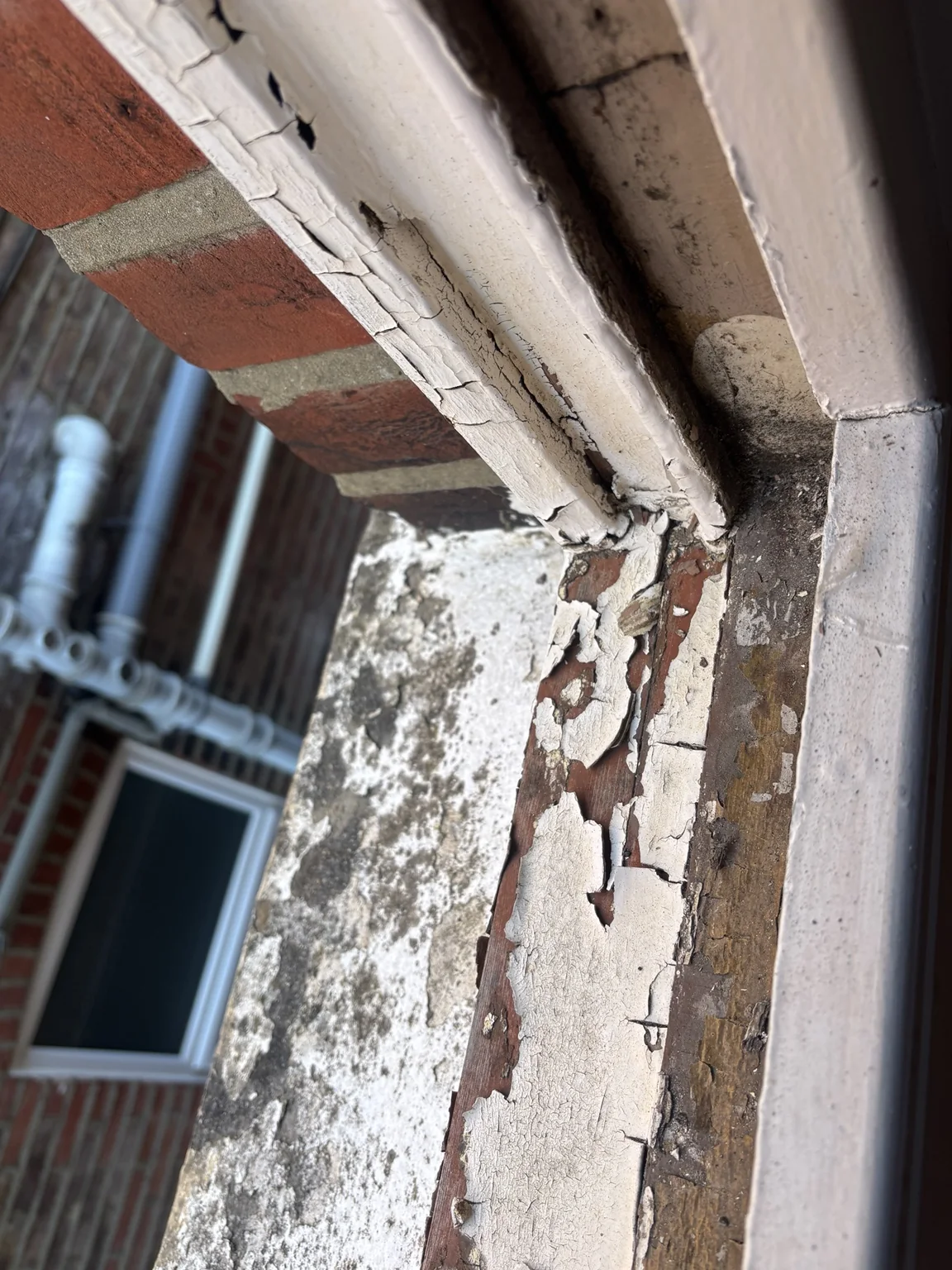
During the inspection of a circa 1900s house in Southsea, defects were identified to a single-glazed, timber-framed, vertically sliding sash window. The sash cord was broken, affecting the operation of the window, while the external timber detailing and decorative finishes were deteriorating.
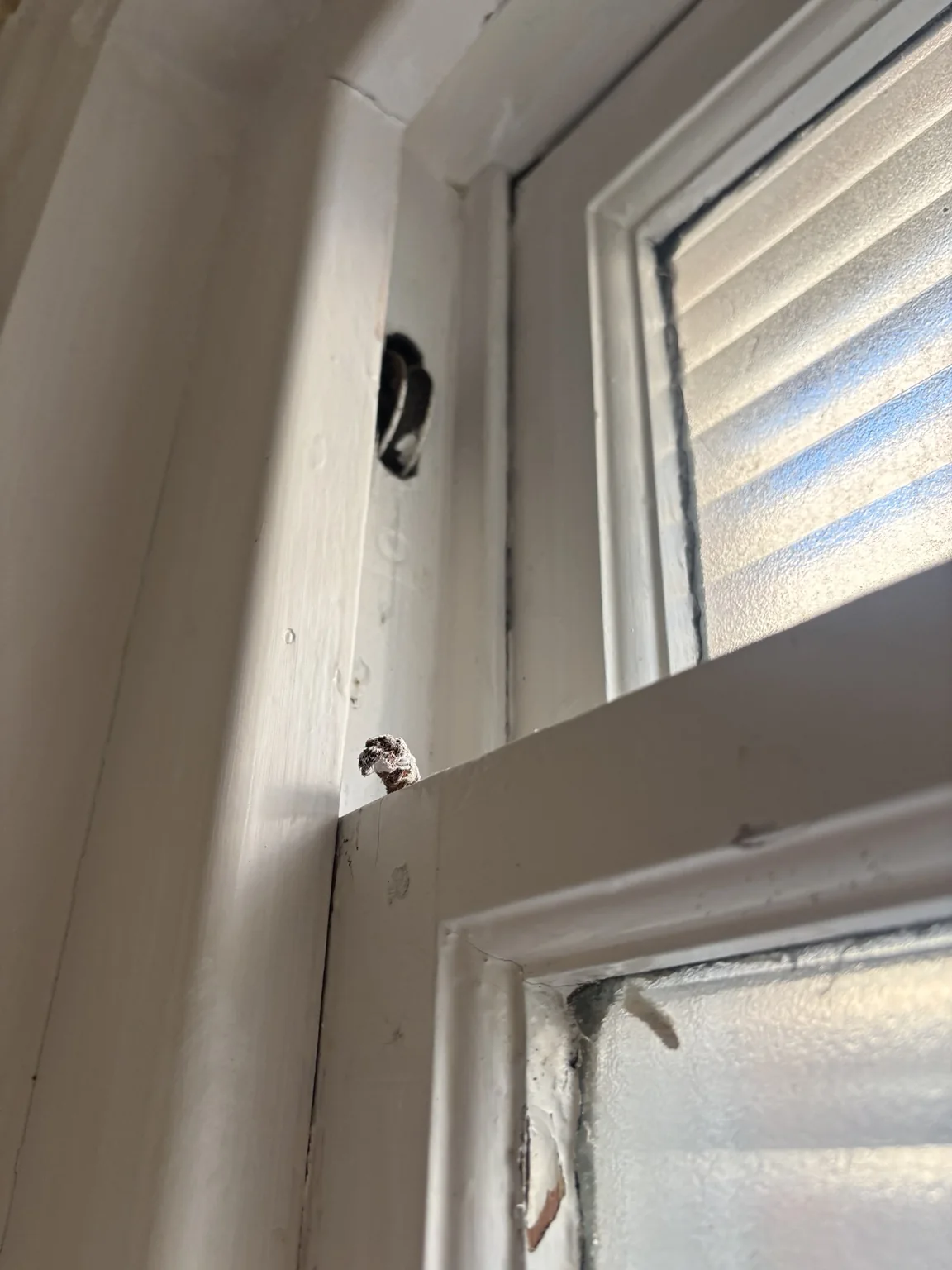
What is a sash cord and why does it matter?
Traditional sliding sash windows usually rely on cords connected to counterweights concealed within the box frame. The weights balance the sash and allow it to move more easily. When a cord breaks, the sash can become difficult or unsafe to operate and the remaining cord and mechanism may be placed under additional strain.
Why is the timber deteriorating?
Timber windows depend heavily on a sound external paint system. In this case, the decorative coating was cracking, flaking and locally breaking down, leaving parts of the timber increasingly exposed to weathering and moisture. Joints, lower rails, glazing details and other areas where water can collect are particularly vulnerable.
Does this mean the window needs replacing?
Not necessarily. The defects seen here indicate a need for maintenance and repair rather than automatic wholesale replacement. A period of thorough preparation and redecoration is required, together with repair of the sash mechanism. Any softened or decayed timber discovered during preparation should be repaired by a competent joiner or sash-window specialist.
If maintenance is delayed and moisture continues to reach exposed timber, decay can become more extensive. At that stage, larger sections of joinery may require replacement and the cost of retaining the original window can increase.
Why this matters in older Southsea houses
Traditional timber sash windows are a common feature of older housing in Southsea and form an important part of the character of many period properties. Where the basic joinery remains serviceable, timely repair and maintenance can often extend its useful life considerably. The key is to deal with failed decoration and minor mechanical defects before they progress into significant timber decay.
What should a buyer do?
A competent joiner or sash-window specialist should inspect the window, replace the defective sash cord and check the remainder of the mechanism. Loose and failed coatings should be removed, defective timber repaired where necessary, and the window prepared and redecorated using a suitable external coating system.