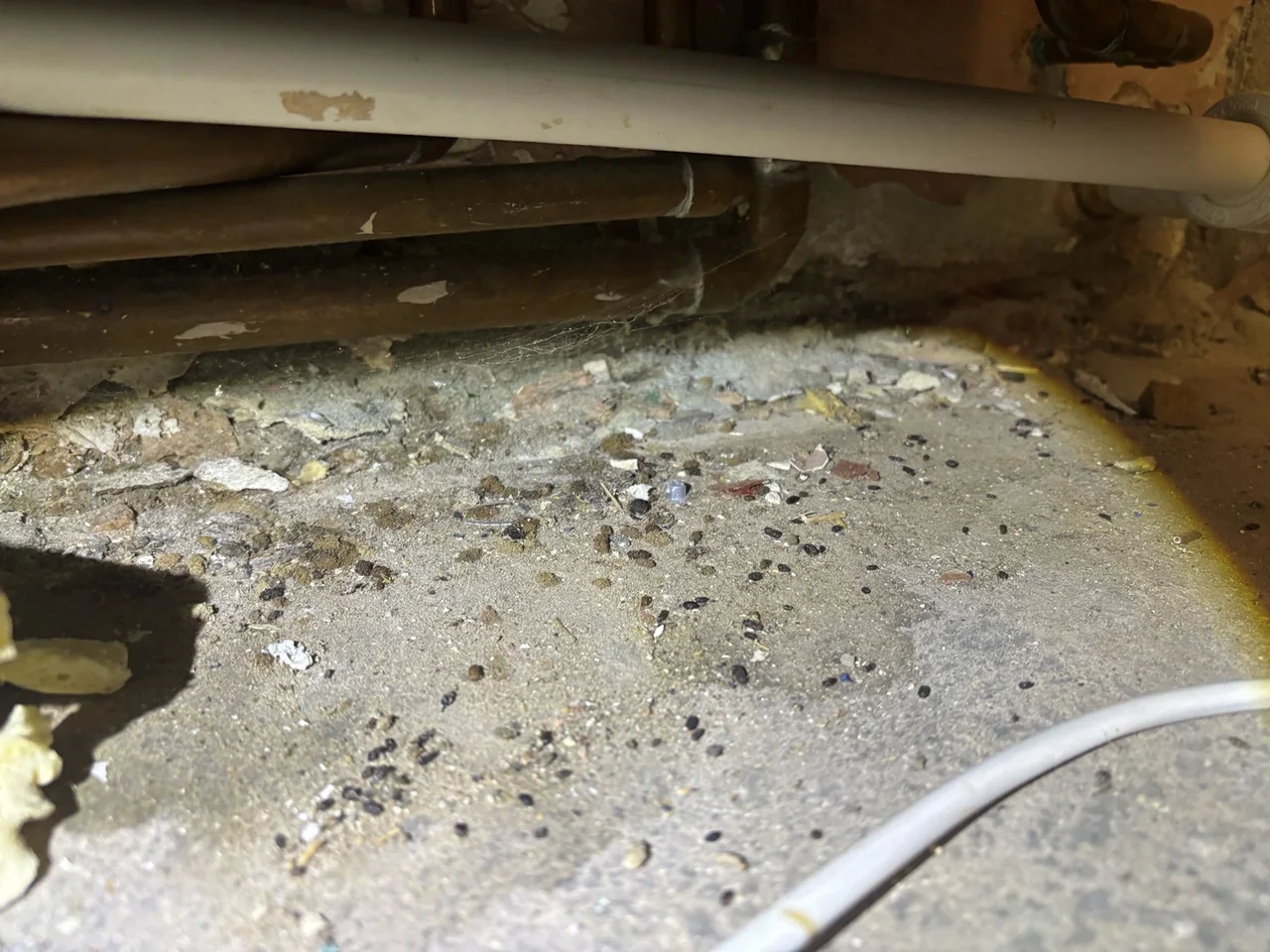
During a RICS Level 2 Home Survey at an occupied property in Worthing, numerous small dark deposits were found beneath the boiler within a kitchen cupboard. Their appearance was consistent with rodent droppings. A tray containing material that appeared consistent with pest-control bait or poison was also present nearby.
No obvious entry point, gnawing or nesting material was seen in the accessible area. However, much of the wall and floor perimeter was concealed by fitted kitchen units, so it was not possible during the visual inspection to establish where rodents may have entered, how extensive any activity was, or whether it was current.
Do droppings mean there is an active infestation?
Not necessarily. Droppings can remain after previous activity, and a visual survey cannot reliably determine their age or establish whether rodents are still present. Equally, finding droppings should not simply be ignored. Where evidence consistent with rodent activity is identified, further investigation is sensible so that the extent of the problem can be established.
The apparent bait tray was relevant context, but its presence alone did not confirm that the occupants were treating an active infestation. It was therefore appropriate to report what was visible without making assumptions about the history of the property.
Why kitchens and service cupboards can be vulnerable
Rodents can exploit small gaps and concealed routes around buildings. Kitchens contain numerous service penetrations for water, drainage, heating, gas and electrical installations, while fitted units can conceal the wall and floor junctions that would otherwise be visible during an inspection.
In this case, no obvious route of entry was visible beneath the boiler. The surrounding kitchen units substantially restricted the view, which is an important inspection limitation: the absence of a visible entry point does not demonstrate that one is not present behind the fitted units or elsewhere in the building.
Why does rodent activity matter to a buyer?
Aside from hygiene concerns, established rodent activity can result in contamination and damage to stored materials. Rodents may also gnaw vulnerable materials including electrical cable insulation, pipe insulation and other soft or flexible components. No such damage was identified in this cupboard during the survey, but it is one reason evidence of activity merits further investigation rather than being treated only as a cleaning issue.
What should happen next?
A pest-control inspection was recommended to establish whether activity was current, assess the likely extent of the problem and identify possible access routes. Where entry points are found, appropriate proofing can then be considered alongside any treatment recommended by the pest-control contractor.
If evidence of damage to electrical wiring or other building services is discovered during that investigation, the affected installation should also be checked by an appropriately qualified contractor.
What a survey can reveal
Buyers naturally focus on rooms, finishes and obvious defects during viewings. Survey inspections also involve looking into accessible cupboards, roof spaces and other less prominent areas where small clues can provide useful information about the condition and use of a property.
This example also shows why findings need to be reported with proportion. The droppings were a reason to recommend further investigation, but they did not provide enough evidence to diagnose an active infestation or its extent during a non-invasive Level 2 inspection.