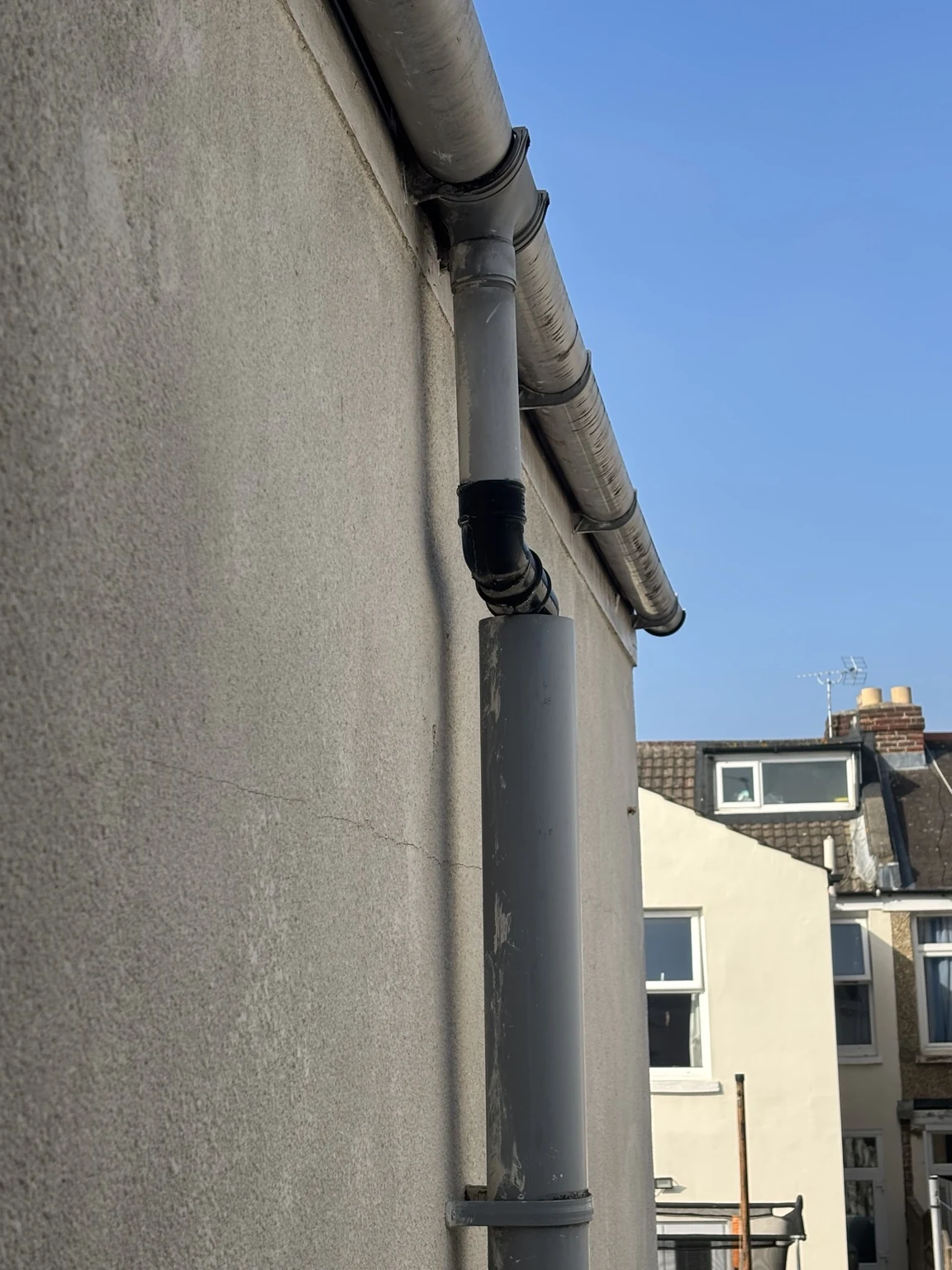
During inspection of this early 1900s mid-terrace house in Portsmouth, the rainwater downpipe was found to have been connected directly into the above-ground soil pipe rather than discharging through a conventional drainage gully or a clearly identifiable below-ground rainwater connection.
The arrangement may have functioned for some time, but it appeared altered and unconventional and warranted further investigation.
Where should a rainwater downpipe normally discharge?
Rainwater collected from a roof needs to be carried safely away from the building. Common arrangements include discharge into a suitable drainage gully, a correctly formed below-ground drainage connection, a soakaway or another surface-water system appropriate to the property.
At many older properties, rainwater and foul drainage ultimately enter the same combined sewer. That is not automatically a defect. The important issue is whether the connection has been properly designed, formed and maintained for the drainage system serving the property.
What was unusual about this arrangement?
Here, the rainwater downpipe appeared to have been adapted so that it entered the external soil pipe above ground. The connection looked different from a conventional purpose-made rainwater drainage detail and raised questions over how and when it had been installed.
Poorly formed or improvised connections can increase the likelihood of leakage at the joints and make future maintenance more difficult. If water escapes at the connection, repeated wetting can also contribute to deterioration of the wall finish and localised dampness.
Can rainwater and foul drainage use the same system?
Yes, in some circumstances. Combined drainage systems are common to many older properties and can carry both foul water and rainwater below ground.
That is different from simply inserting or adapting a rainwater pipe into an above-ground soil or waste pipe without a suitable connection. Where the arrangement is uncertain, the route of the drainage and the suitability of the connection should be established.
Why does the detail matter?
Rainwater systems can carry a substantial volume of water during heavy rainfall. A defective or unsuitable connection may lead to leakage, water staining to the external wall, deterioration of adjacent finishes and maintenance problems.
The significance will depend on the design and condition of the drainage system, whether the connection is watertight and where the combined pipework ultimately discharges.
What should happen next?
A competent drainage or plumbing contractor should inspect the arrangement and confirm where the rainwater and soil pipe discharge. If the existing connection is found to be poorly formed or unsuitable, the rainwater downpipe should be altered to discharge through an appropriate drainage arrangement.
Depending on the property, this might be a suitable gully, a correctly formed below-ground drainage connection or another properly designed surface-water system. Any leakage or associated deterioration to the adjoining wall should be repaired once the drainage arrangement has been corrected.
What a survey can reveal
Drainage alterations are easily overlooked during an ordinary property viewing. Unusual pipe connections, leaking joints and poorly arranged rainwater goods can indicate previous alterations and may justify further investigation before purchase.
At this Portsmouth property, a relatively small external detail raised a wider question about how the rainwater drainage had been altered and whether the arrangement was appropriate.