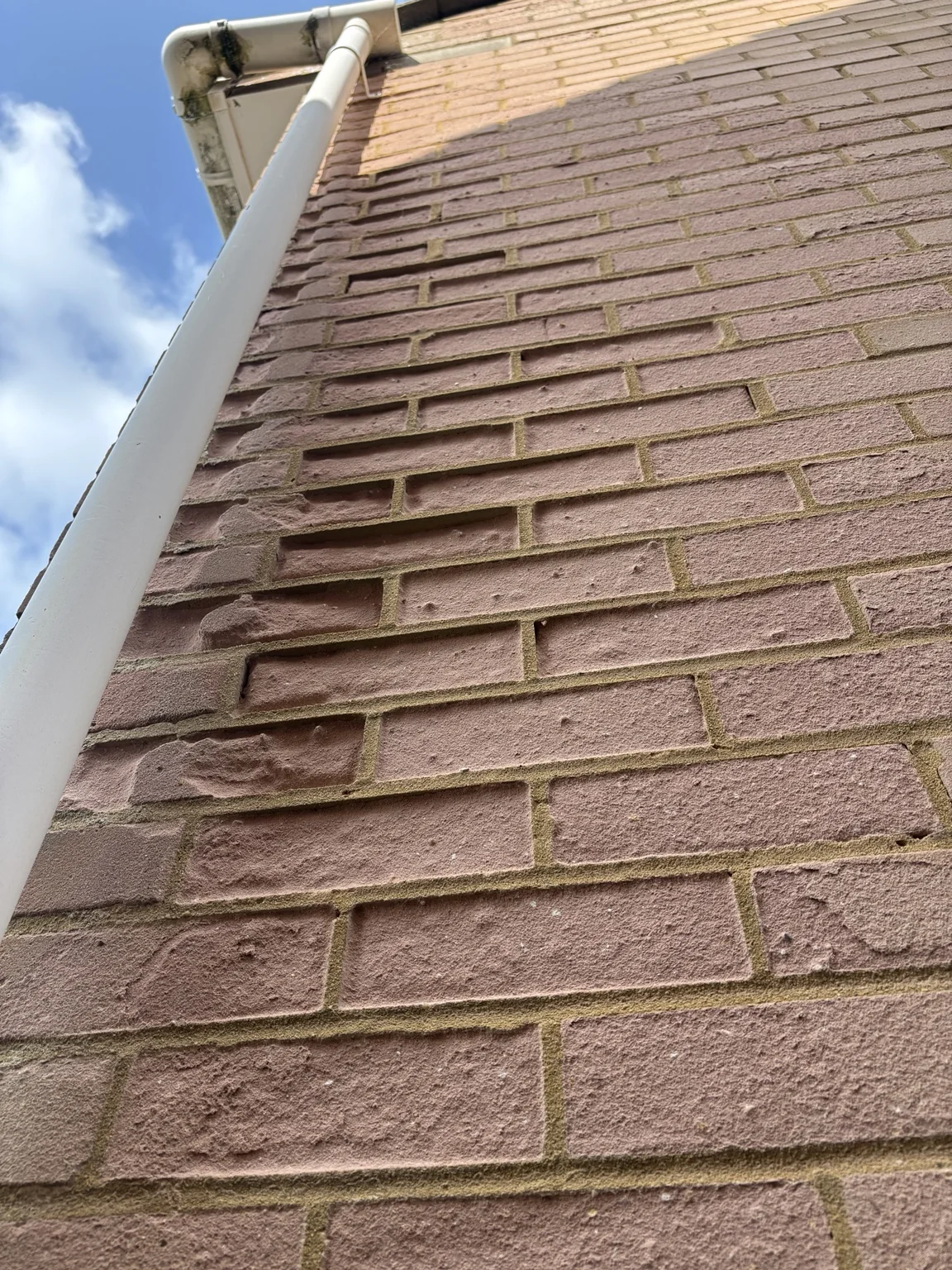
During the inspection, a vertical band of facing bricks beside the rainwater downpipe had lost sections of their outer faces. This is known as spalling. The distribution of the damage made the rainwater installation and the property’s exposed coastal setting important considerations.
What is spalling brickwork?
Spalling occurs when the surface of a brick breaks, flakes or detaches. Once the denser outer face is lost, the more porous material beneath is exposed and can absorb water more readily. Deterioration may then become progressively worse if the source of moisture is not addressed.
Why can it develop beside a downpipe?
Leaking joints, defective seals, poorly aligned sections or overflowing gutters can repeatedly wet the same area of wall. Moisture may enter porous or weathered bricks and, during cold conditions, freeze and expand. Repeated wetting and drying can also weaken the brick face. In a coastal location, wind-driven rain and salt exposure may increase the severity of weathering.
What should be checked?
The gutter and downpipe should be checked during rainfall where possible. A surveyor will consider whether joints are leaking, whether the gutter is overflowing, whether the downpipe is blocked or discharged inadequately, and whether mortar joints or adjacent sealants are also defective.
How is it repaired?
The source of concentrated wetting should be corrected first. Badly damaged individual bricks are usually cut out and replaced with bricks that are compatible in size, appearance, strength and porosity. Localised repointing may also be needed. Smearing mortar over the damaged faces is rarely a durable repair and can make later replacement more difficult.
Should buyers be concerned?
Isolated spalling is often repairable, but widespread damage can be costly and may indicate prolonged moisture exposure. The extent of replacement, access requirements and the availability of matching bricks should be considered before purchase.