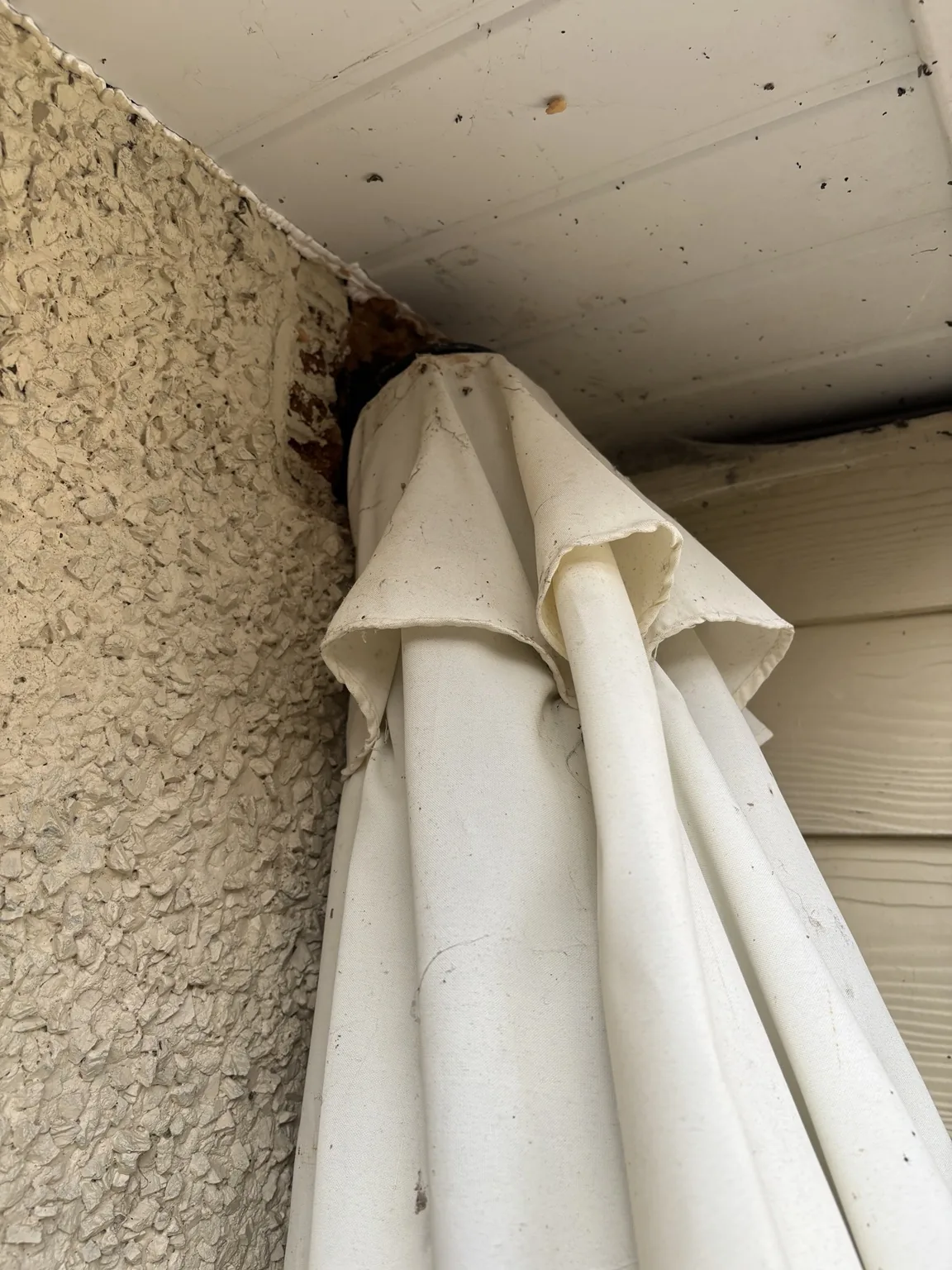
What the inspection revealed
During a Level 2 Home Survey of a 1930s bungalow, I moved around the outside of the property carefully and looked behind a garden parasol stored against the wall. It was concealing a damaged former wall vent with an incomplete cover and an exposed opening through the external wall.
This is the type of defect that can easily be missed during a short viewing. By inspecting the property as fully as reasonably possible, rather than simply observing the readily visible surfaces, I was able to bring the issue to the buyer’s attention before they committed to the purchase.
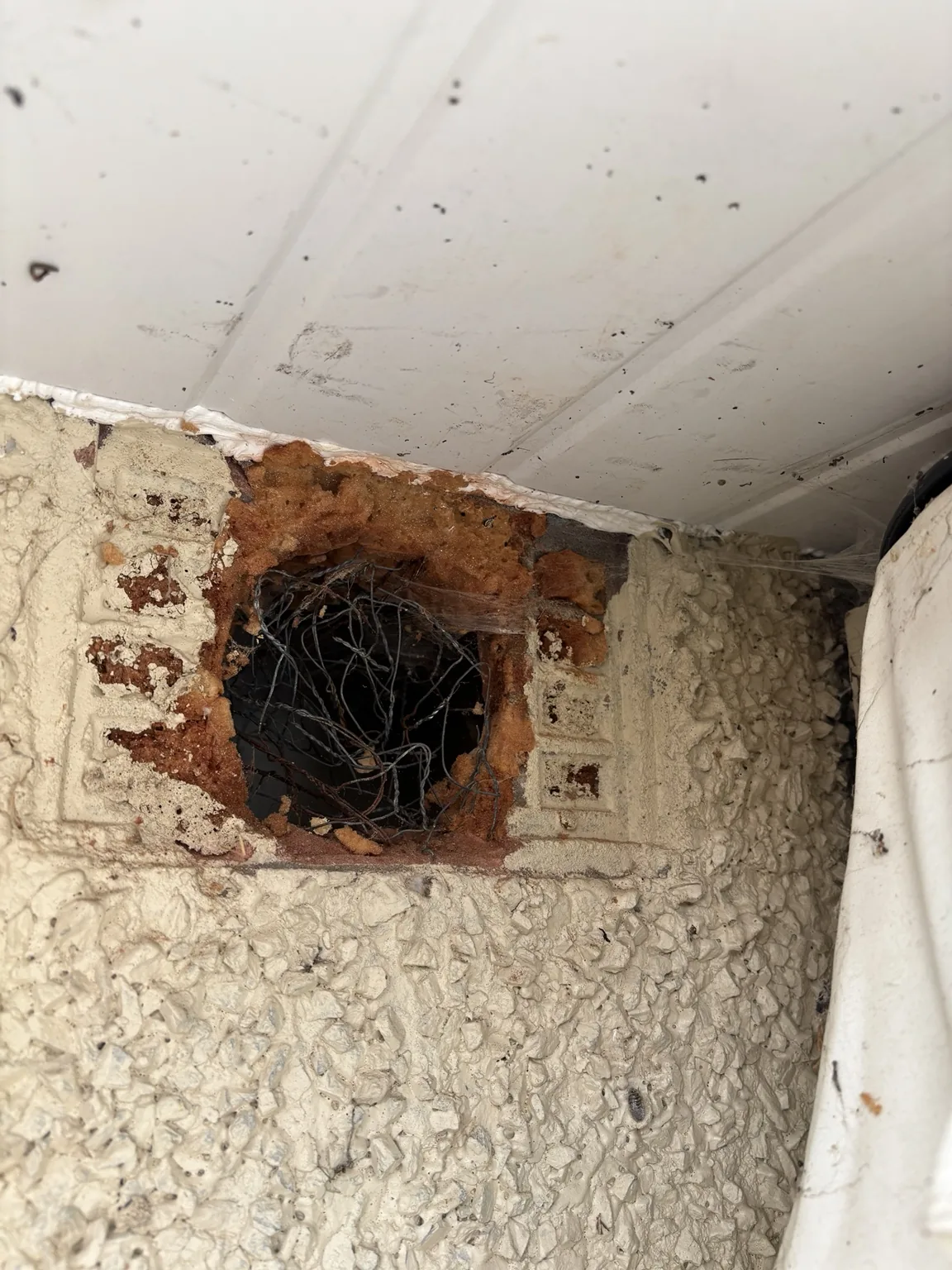
Why the opening matters
A former wall vent should be securely closed or protected with a suitable weather-resistant cover. In this case, the damaged condition could allow wind-driven rain to penetrate the wall and create an entry point for rodents, birds or insects.
Water entering through an unprotected opening can affect concealed materials and internal finishes, while pests may gain access to cavities or roof spaces depending on the construction and route of the opening. The defect therefore required repair rather than being treated as a purely cosmetic issue.
Recommended repair
The damaged vent cover should be removed and the opening repaired using a durable detail appropriate to the wall construction. The completed work should be weather-resistant, securely fixed and capable of preventing pest entry. The surrounding masonry and internal area should also be checked for signs of moisture penetration or contamination.
Why a survey matters
Properties are often viewed while occupied, with furniture, garden equipment and stored belongings still in place. These items can obscure defects, whether intentionally or simply through everyday use. A professional survey involves a more methodical inspection and an experienced surveyor will look beyond obvious surfaces wherever it is safe and reasonable to do so.
This finding demonstrates the difference between viewing a property and having it surveyed. The extra care taken during the inspection identified a repair issue that might otherwise have remained hidden until after completion.