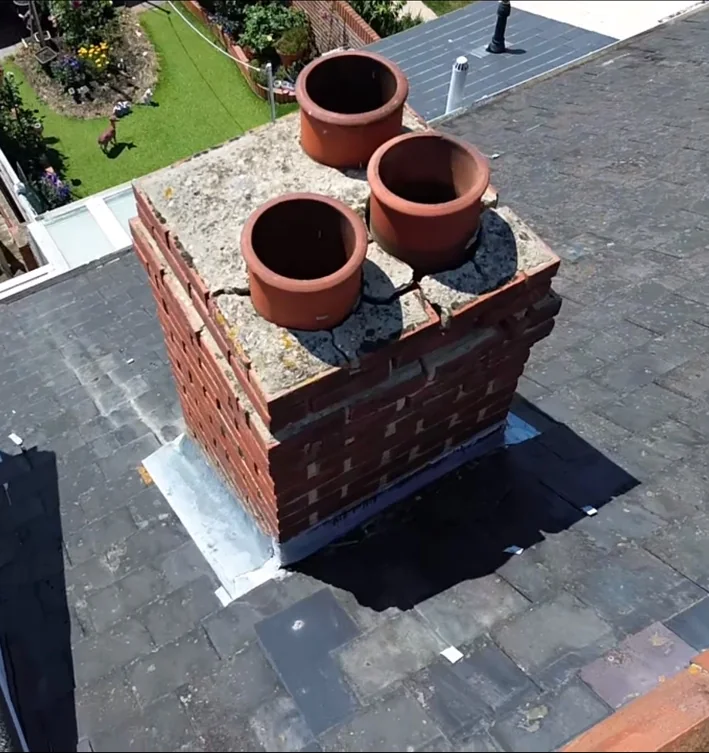
The inspection photograph shows cracking and deterioration to the mortar flaunching at the head of the chimney. Flaunching is the sloping mortar formed around the chimney pots. Its purpose is to shed rainwater away from the top of the stack and help bed and secure the pots in position.
Why does cracked flaunching matter?
Once the mortar cracks or becomes loose, rainwater can penetrate into the chimney head instead of being directed away. Repeated wetting can accelerate deterioration of the surrounding masonry and mortar joints, contribute to dampness within the stack and, during colder weather, increase the risk of frost-related damage.
Deteriorated flaunching can also reduce the restraint provided around the chimney pots. If the mortar continues to break down, the pots may become less secure and loose fragments of mortar can create a safety risk at roof level.
Why fresh mortar is normally required
Where the flaunching is extensively cracked or poorly bonded, simply filling individual cracks is unlikely to provide a durable repair. The defective material should normally be carefully removed and the flaunching renewed using a suitable fresh mortar mix. The new mortar should be properly compacted around the pots and formed with an adequate fall so rainwater drains away from the chimney openings rather than collecting around them.
Renewing the flaunching in this way restores weather protection to the chimney head, helps secure the chimney pots and reduces the risk of further water penetration into the stack.
What should be checked at the same time?
A competent roofing contractor should also check that the chimney pots themselves are sound and stable, the upper brickwork and mortar joints are in serviceable condition, and the flashings at the junction between the chimney and roof are watertight. Defects can occur together, so repairing the flaunching alone may not resolve an existing leak if another part of the chimney detail is also defective.
Recommended action
The cracked and deteriorated flaunching should be renewed by a suitably experienced roofing contractor using appropriate fresh mortar. Safe access will be required. Any loose chimney pots, defective masonry or associated flashing defects identified during the work should be repaired at the same time.