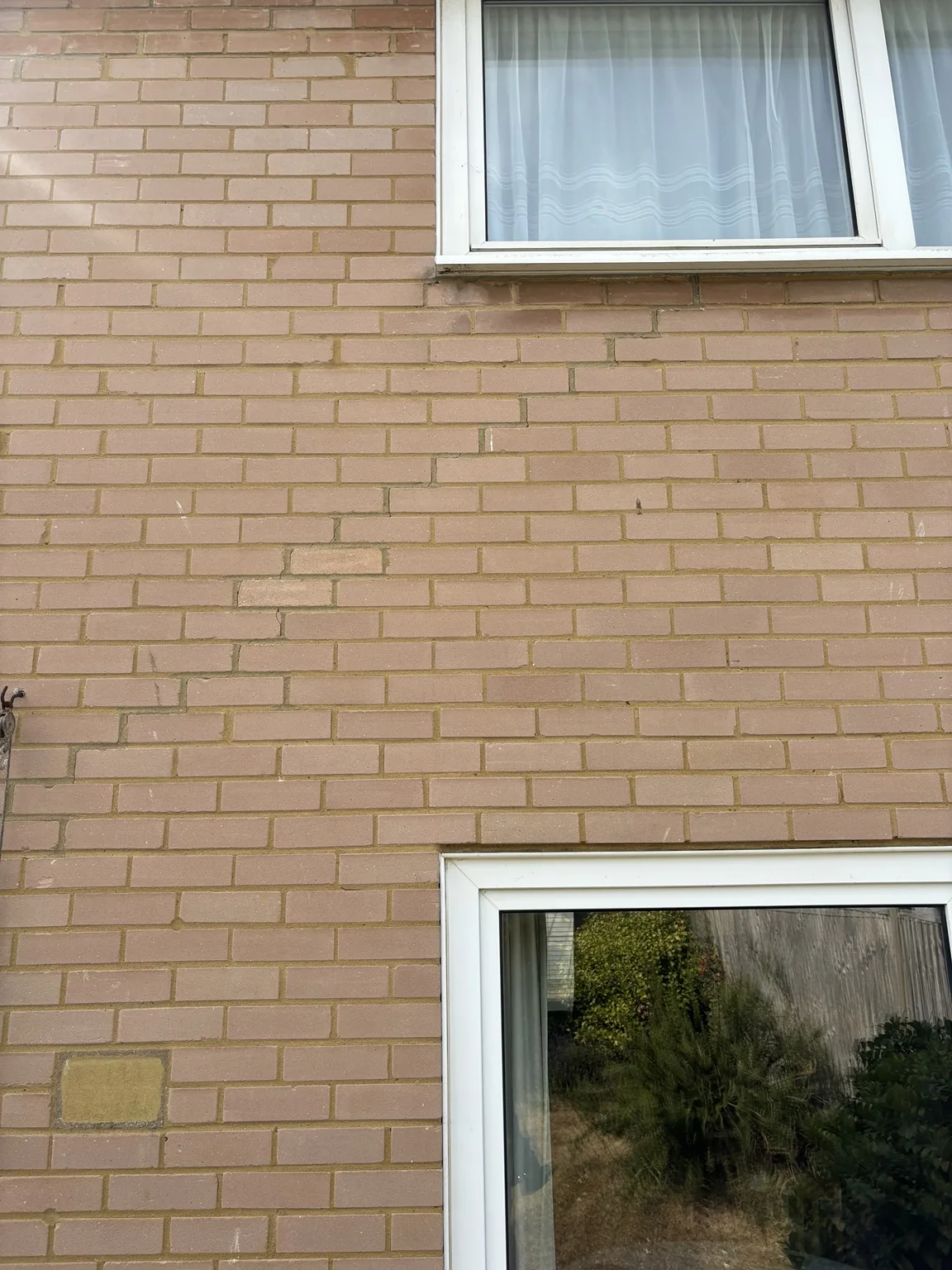
Stepped cracking was visible through the mortar joints above and below a first-floor window opening. The pattern is consistent with movement concentrated around the opening and warrants assessment of the support provided to the masonry.
Why does cracking form around openings?
Brickwork above a window should be supported by a lintel. Cracking can occur where a lintel is absent, undersized, inadequately supported or deteriorated. Corrosion of a concealed steel lintel can expand the metal and disturb the masonry. Other possible causes include thermal movement, historic alteration of the opening and localised settlement.
What does the stepped pattern mean?
Masonry tends to separate along the weaker mortar joints, producing a diagonal or stair-step pattern. The location, width and direction of the cracking, together with any distortion of the window frame or brickwork, help a surveyor judge whether the movement appears historic, stable or potentially progressive.
How is the cause investigated?
The inspection may include checking the opening internally and externally, looking for corresponding cracks, measuring crack widths, checking whether doors or windows bind and considering whether the opening has been enlarged or replaced. In some cases, limited opening-up or advice from a structural engineer may be appropriate before repairs are specified.
What repairs may be needed?
Repairs depend on the cause. They may include replacing or installing a suitable lintel with adequate bearings, treating or replacing corroded steel, rebuilding displaced masonry and repointing cracks. Cosmetic filling alone should not be undertaken until the source of movement has been addressed.
Does this always mean major structural movement?
No. Stepped cracking around an opening does not automatically indicate subsidence or extensive structural failure. However, it should not be dismissed without considering the supporting lintel and the wider pattern of movement.