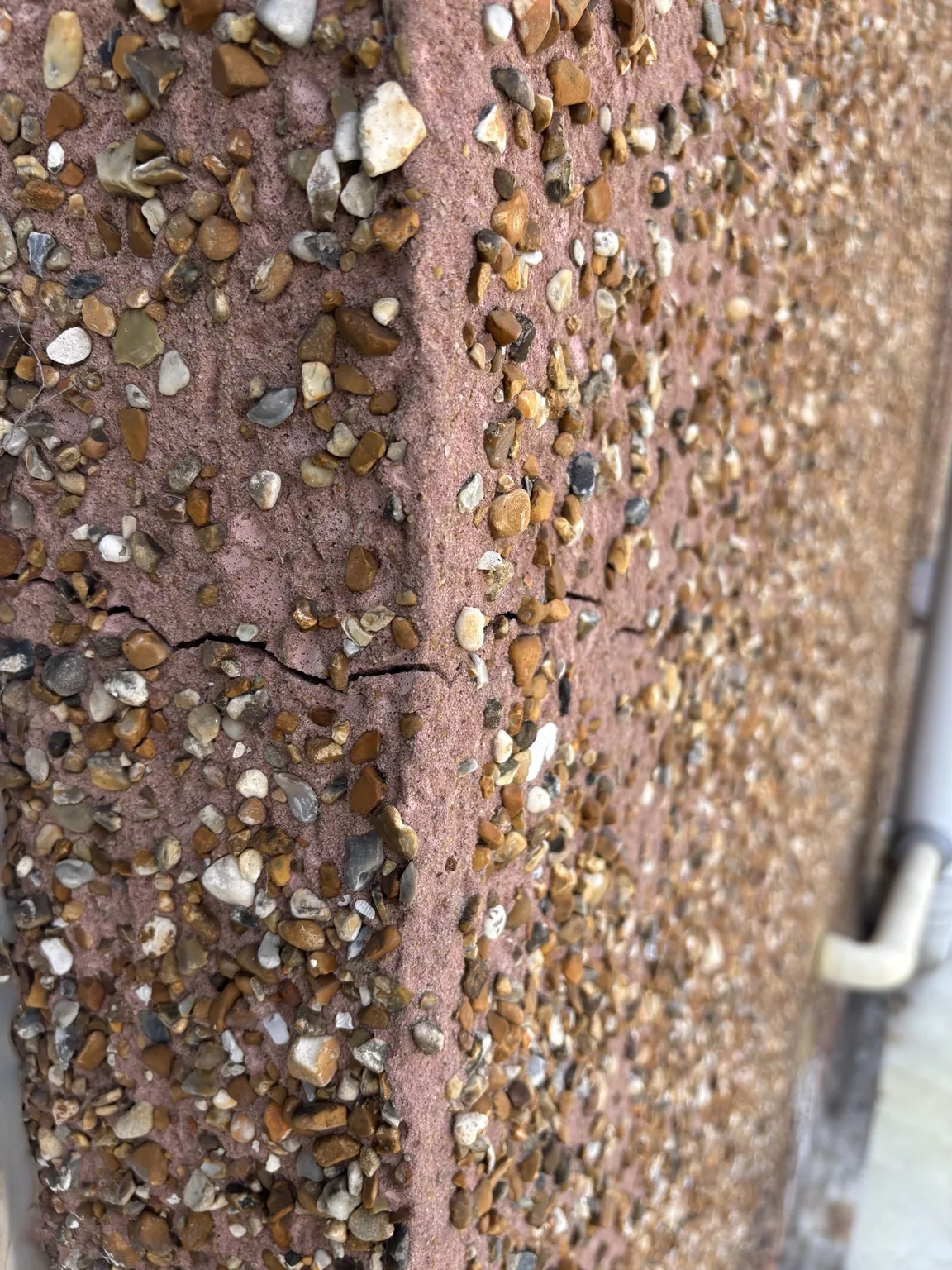
During an inspection of a 1930s mid-terrace house, regular horizontal cracking was identified within the external wall finish. The spacing and direction of the cracks were consistent with movement that can be associated with corroding cavity wall ties.
What are cavity wall ties?
Cavity wall ties connect the inner and outer leaves of a cavity wall so that they act together. Earlier ties were commonly formed from mild steel. Where moisture reaches the metal over a prolonged period, corrosion can develop.
Why does horizontal cracking appear?
Steel expands as it corrodes. This expansion can place pressure on the surrounding mortar bed and masonry, producing horizontal cracking at the levels where the ties are built into the wall. In more advanced cases, the outer leaf can also become distorted or bulged.
Why does it matter?
The cracking can initially appear cosmetic, but deterioration of the wall ties may reduce the restraint provided to the outer leaf. The regular horizontal pattern is therefore an important warning sign rather than something that should simply be filled and redecorated.
What should happen next?
A specialist wall tie investigation is normally recommended where failure is suspected. This may include borescope inspection, metal detection or localised opening-up to establish the type, spacing and condition of the existing ties. If failure is confirmed, remedial stainless-steel ties can usually be installed, with repairs to the affected mortar joints and masonry.
Why a survey matters
A buyer may notice cracking during a viewing without recognising the pattern or its potential significance. A professional survey considers the position, direction and repetition of cracking and identifies when specialist investigation should be completed before committing to the purchase.