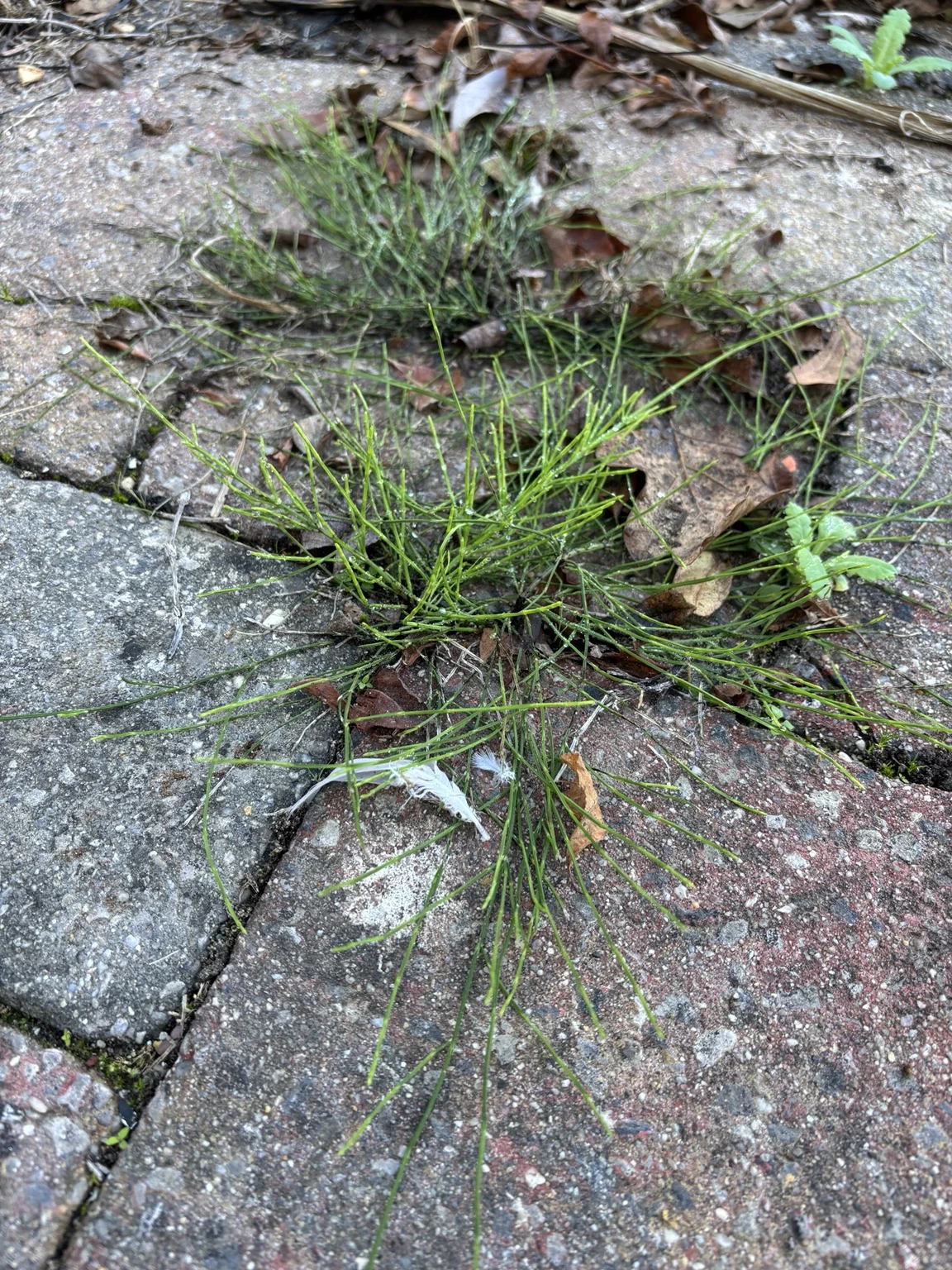
During this RICS Level 3 Building Survey in Worthing, horsetail was noted growing through joints within the block paving.
Why is horsetail so persistent?
Horsetail develops an extensive underground network of rhizomes. New shoots can repeatedly emerge from this system even after the visible growth has been cut back, which is why short-term surface treatment often fails to provide lasting control.
Fragments of underground growth can also contribute to regrowth, so disturbance of the ground does not necessarily eradicate the plant.
Can it damage paving?
Horsetail commonly exploits existing joints and gaps within paving. It should not automatically be described as structurally damaging block paving, but repeated emergence can disrupt jointing material, spoil the appearance of hard landscaping and create an ongoing maintenance burden.
If paving is already poorly laid, open-jointed or locally displaced, persistent vegetation can make the problem more noticeable and more difficult to manage.
Why should buyers be aware of it?
The main issue is persistence rather than immediate building damage. Control may require repeated management over a prolonged period and can be more difficult where the plant extends beneath paving, borders or neighbouring land.
Where a buyer is planning extensive landscaping, resurfacing or garden alterations, the presence of horsetail is worth factoring into future maintenance and project costs.
What should happen next?
Where growth is widespread, specialist horticultural advice may be appropriate. The extent of visible growth should be monitored and any treatment should take account of the underground rhizome system rather than relying solely on removal of surface shoots.
What a survey can reveal
A detailed external inspection includes more than the building itself. The condition of paths, paving, boundaries and significant vegetation can all influence future maintenance. Small clues such as this can therefore be relevant to a buyer even when they are not major building defects.