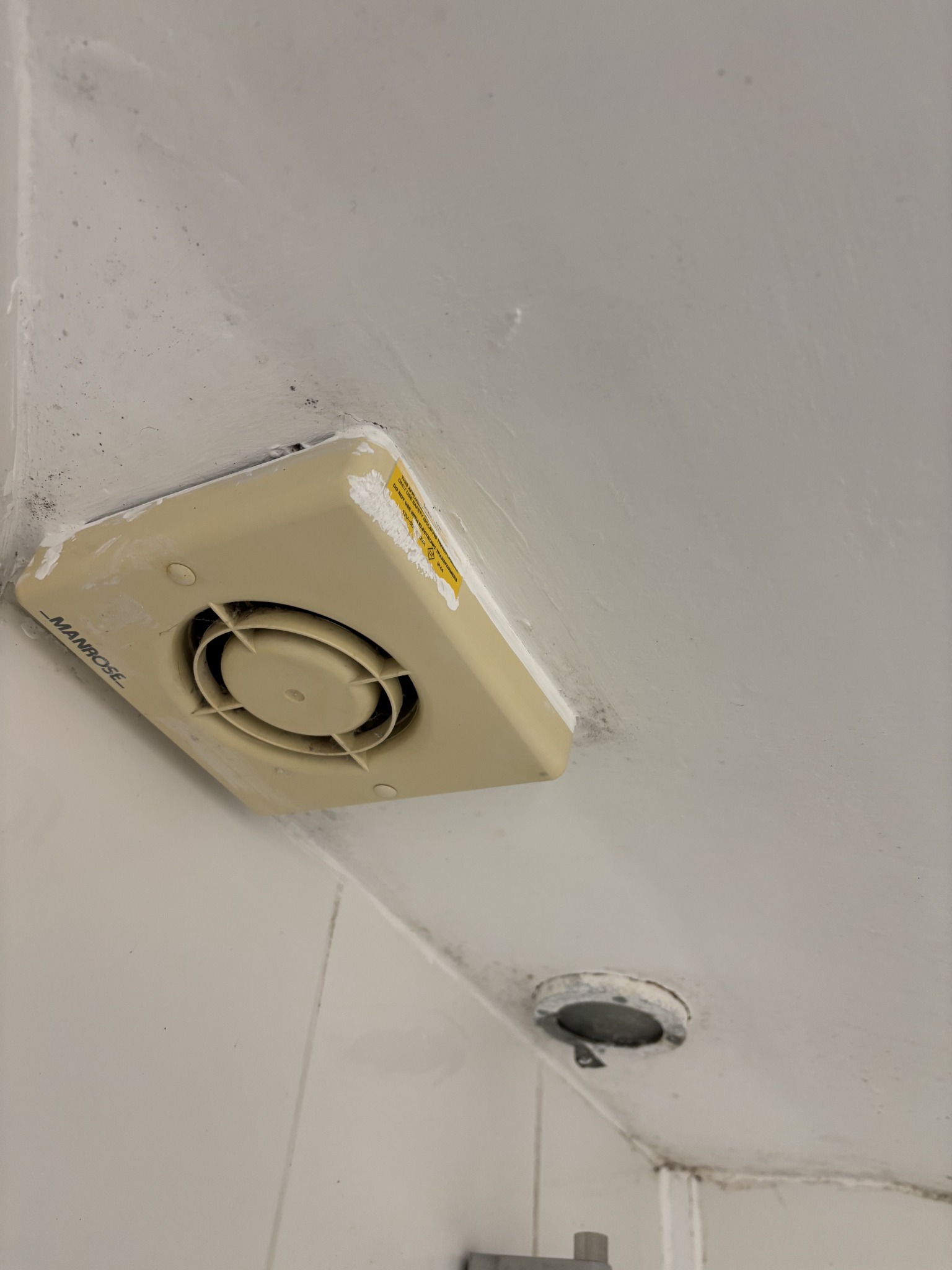
During a RICS Level 3 Building Survey of a property in Worthing, staining consistent with condensation was observed to the bathroom ceiling. The extractor fan was noisy when operating. A handheld anemometer held at the fan indicated very little airflow.
A noisy fan does not confirm effective extraction
Hearing a fan run is not enough to establish that it is removing moist air effectively. In this case, the ceiling staining, operating noise and very low indicated airflow together strongly indicated inadequate extraction. On the evidence available, the fan was not considered fit for effective use in its existing condition, and replacement or upgrading was recommended.
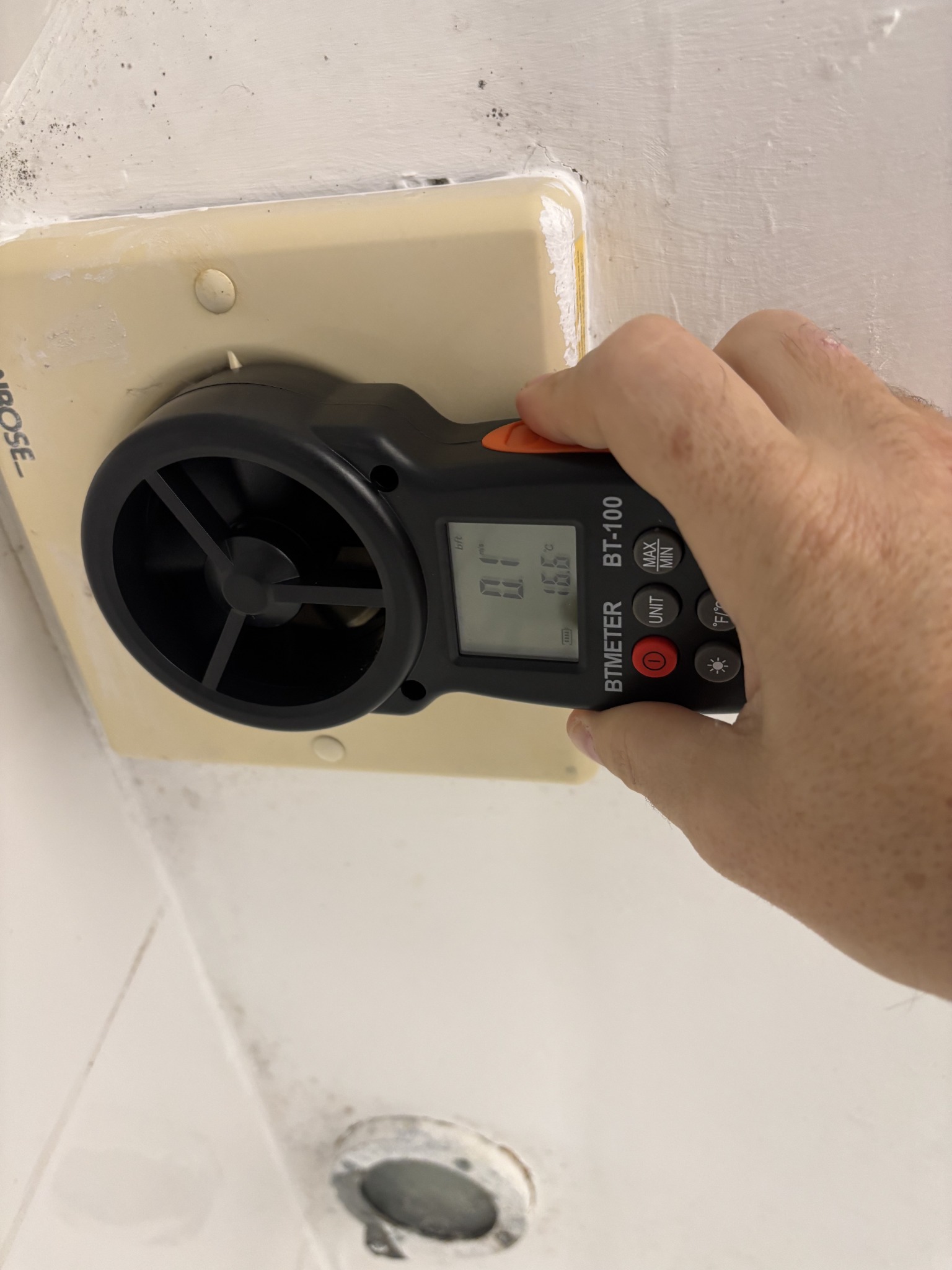
What the anemometer observation could establish
This was an indicative check during the survey, not a formal airflow test. It did not establish the installed extraction rate or demonstrate compliance or non-compliance with ventilation requirements. Readings at a fan grille can be affected by the instrument position and the pattern of airflow, and should not be treated as a verified whole-system performance measurement.
The observation supported the concern about ineffective extraction, but did not establish the precise cause. Fan deterioration, restricted ductwork, an obstructed external outlet or insufficient replacement air are possible contributors; none should be assumed to have been confirmed by this check.
Why condensation staining matters
Bathrooms generate substantial moisture during bathing and showering. Where moist air is not removed effectively, it can condense on cooler surfaces and contribute to staining, mould growth and deterioration of decorations. Ventilation is one part of the picture: heating, insulation, cold surfaces and how the room is used can also influence condensation.
The staining in this example was consistent with condensation. A brief survey observation cannot establish every contributing cause, and persistent or localised dampness may require further investigation for other sources of moisture.
Recommended action: replace or upgrade the extraction
Replacement or upgrading of the extractor was recommended, with the work assessed and carried out by a suitably competent contractor. The contractor should check the complete extraction route, including the ductwork and external termination, and ensure that the selected fan is suitable for the room and installation. Effective performance should be checked after the work.
For bathrooms and wet rooms, a timer-overrun (time-delay) extractor fan is worth considering. This allows extraction to continue for a set period after the light or control is switched off, helping to remove residual moisture after bathing. The appropriate fan, controls and overrun setting depend on the installation; a timer alone will not compensate for inadequate airflow.
Once the moisture issue has been addressed, affected finishes can be appropriately cleaned and repaired. Redecoration alone would not resolve ineffective extraction.
What this means for a buyer
A working switch and an audible fan do not demonstrate adequate ventilation. A property-specific survey can bring together visible staining and practical observations to explain why further assessment or repairs are needed. Buyers should establish the likely scope and cost of the recommended work before committing to the purchase.